
How Much Car Can I Afford Based on My Salary in the USA?

Stepping onto a dealership lot was thrilling for Ayansh—the shiny paint, the new car smell, and the pure excitement of finally upgrading his old, unreliable daily commuter. But before letting a smooth-talking salesperson pressure him into signing away years of his paycheck, Ayansh needed to accurately determine how much car can I afford using a proven financial formula that protects his family’s hard-earned savings.
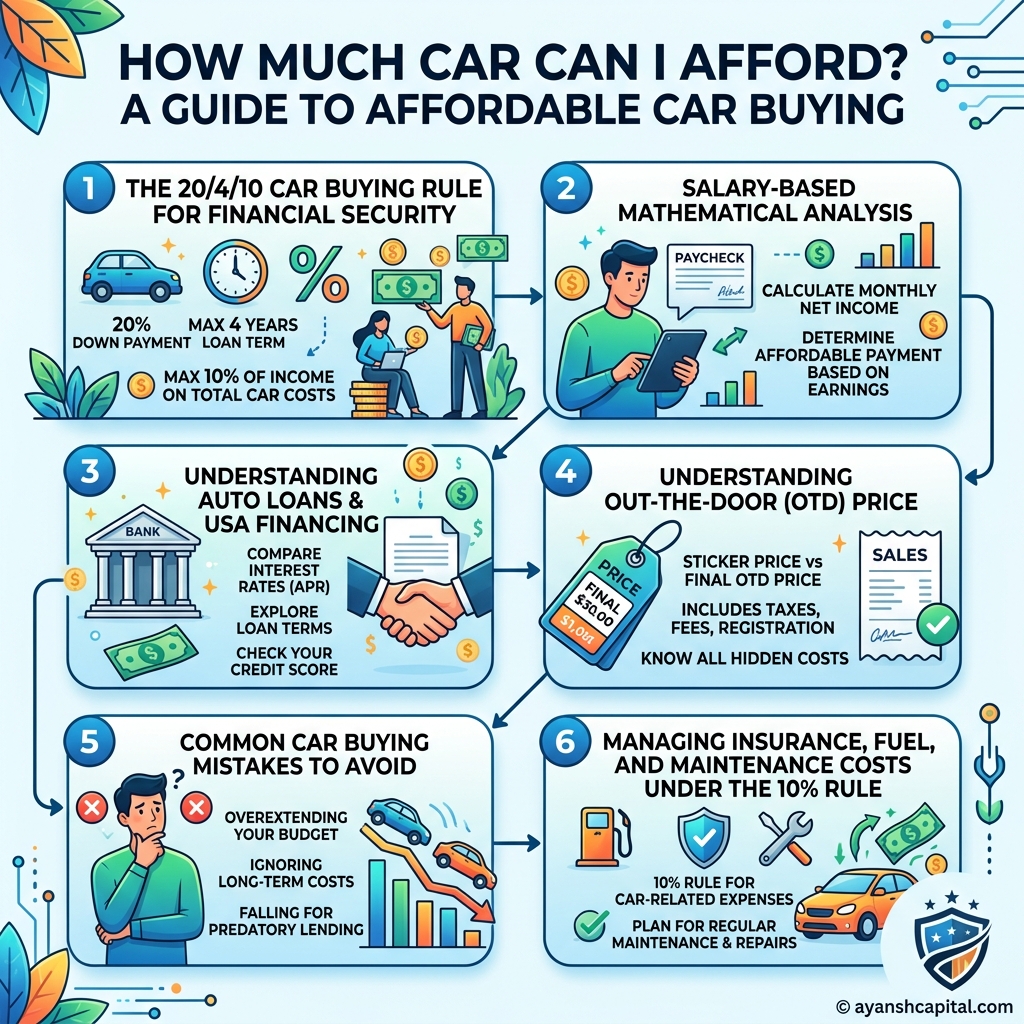
The 20/4/10 Rule: Calculating how much car can I afford Safely
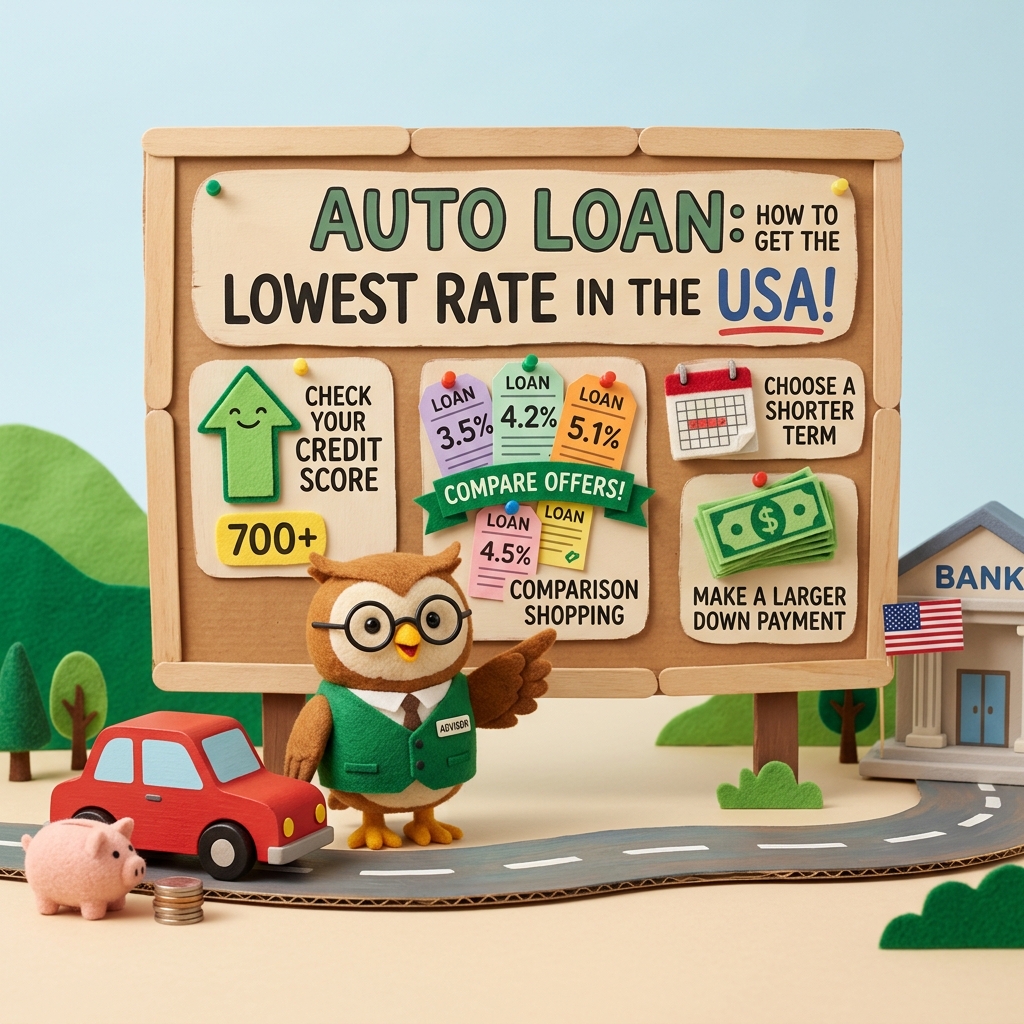
Protecting Your Household with a 20% Down Payment
- To confidently answer how much car can I afford without risking his family’s financial stability, Ayansh knew paying 20% of the price upfront was his strongest safety net against unexpected life hurdles.
- A car is a depreciating machine that loses up to 25% of its value the exact moment he drives it home, immediately putting a hidden dent in his household wealth.
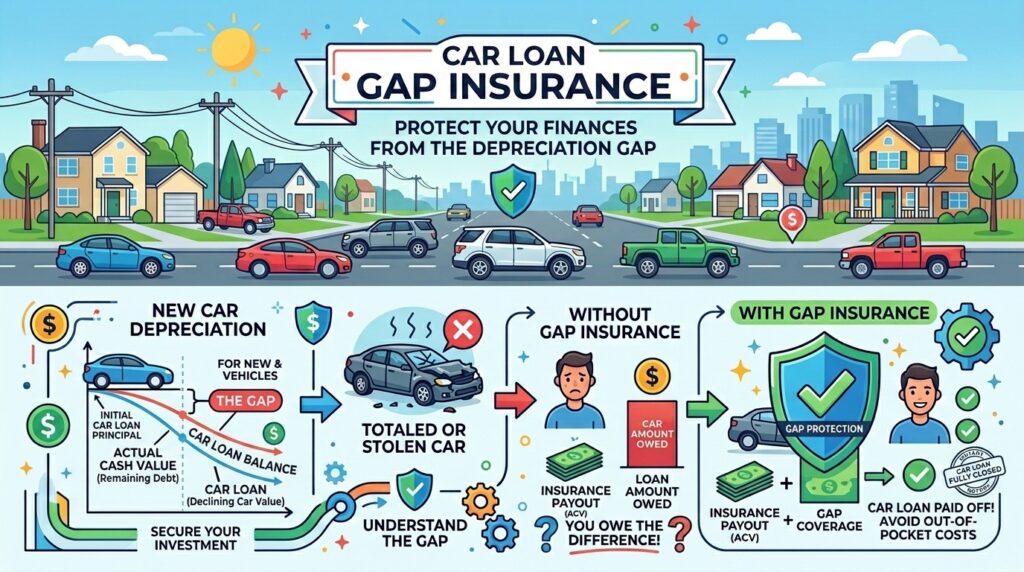
- Putting 0% down would instantly trap him “underwater,” meaning he would owe the bank thousands more than the car is worth, causing immense mental stress for him and his spouse.
- If a sudden accident totals the family vehicle, standard insurance won’t cover the full loan, forcing Ayaansh to empty his precious emergency fund just to pay off a destroyed car.
- Saving up for that 20% down payment guarantees a smaller loan and lower monthly bills, freeing up cash for his children’s future instead of paying heavy bank interest.
Escaping the Stress of Long-Term Car Loans
- Dealerships aggressively pushed 7-year loans to make the monthly payment look cheap, trying to trick hardworking parents like Ayansh into buying flashy vehicles beyond their true capacity.
- Stretching a loan to 84 months quietly robs a family’s future wealth through thousands of dollars in hidden interest, keeping them financially chained far longer than necessary.
- By strictly capping his loan at 4 years (48 months), Ayaansh ensured the car would be completely paid off before expensive, stressful repair cycles and breakdowns ruin his household budget.
- When deeply analyzing how much car can I afford, Ayaansh learned that a 4-year limit keeps him completely debt-free faster, giving him real peace of mind when life throws unexpected medical or job-related challenges his way.
Keeping Total Costs Under 10% of Your Income
The strictest boundary of this rule states that total car expenses must never exceed 10% of a pre-tax monthly salary, ensuring Ayansh’s household runs smoothly without financial anxiety.
This 10% limit isn’t just for the loan; it must comfortably cover insurance, filling up the gas tank for daily school runs, and routine oil changes to keep his family safe on the road.
Because Ayaansh earns $6,000 monthly, his total vehicle budget is exactly $600—leaving roughly $330 for the loan after paying for fuel and basic family auto insurance protection.
Spending too much on a depreciating machine leaves families desperately struggling to pay for groceries, unexpected illnesses, or saving for a comfortable, stress-free retirement.
Sticking to this exact mathematical boundary permanently solves how much car can I afford, ensuring families like Ayaansh’s enjoy the ride without sacrificing their ultimate financial freedom.
The Breaking Point: A Wake-Up Call for My Family
- I stared at the heavy repair bill for my old, rusted sedan. It had broken down again, this time leaving me stranded in the rain and making me late to pick up my kids from school.
- Standing there, I realized my family desperately needed a safer, more reliable vehicle. But before walking into a dealership and getting trapped in a loan that could drain our monthly grocery budget, I had to pause.
- I sat down at my kitchen table, looked closely at my household finances, and asked myself a critical question: how much car can I afford?
Figuring Out how much car can I afford to Protect My Family
- Instead of listening to a pushy salesman, I relied on a safer personal rule: taking a 4-year (48-month) loan at a 7% interest rate (APR) and making a 20% down payment from my savings.
- I also promised myself never to spend more than 10% of my monthly income on total car costs, including gas and insurance.
- This wasn’t just math to me; it was a necessary shield to protect my wife and kids from going bankrupt if an unexpected medical emergency ever hit us. Here is how I applied this rule to different stages of my life and career.
When My Salary Was $50,000 Per Year
- Early in my career, I was making $50,000 a year. I just needed a good-condition used car to commute without the daily panic of engine failures. My monthly income was about $4,166, meaning my strict 10% car budget was exactly $416.
- After setting aside $150 to cover gas and basic insurance, I only had $266 left for the actual car payment. At a 7% rate over 48 months, the bank approved me for an $11,145 loan. Adding my hard-earned 20% down payment of $2,786, the total car price came to roughly $13,931.
- So, when answering how much car can I afford, I knew my absolute limit was between $13,500 and $15,000. Sticking to this strict boundary meant I never had to sacrifice my toddler’s daycare fees just to pay the bank.
When I Reached a $120,000 Salary
- Later, earning $120,000 a year, I wanted to treat my family to a premium vehicle like a Toyota RAV4 or a Tesla. But I refused to compromise my kids’ college future for a shiny hood ornament. My 10% budget grew to $1,000 a month.
- Because premium cars cost more to maintain, setting aside $250 for insurance and fuel left me with a $750 payment. That gave me a $31,347 loan. Putting down 20% ($7,836) brought the total price to $39,183.
- Even at this comfortable stage, calculating how much car can I afford perfectly allowed me to buy a luxury vehicle between $38,000 to $42,000 while continuing to fund my children’s education without a single sleepless night.
Understanding USA Financing: how much car can I afford with an Auto Loan?
- Buying a car in the United States taught me a hard lesson: it’s not just about picking a shiny vehicle; it’s a serious contract that directly impacts a family’s peace of mind.
- I learned that banks analyze three main things, and mastering them protected my household from greedy lenders.
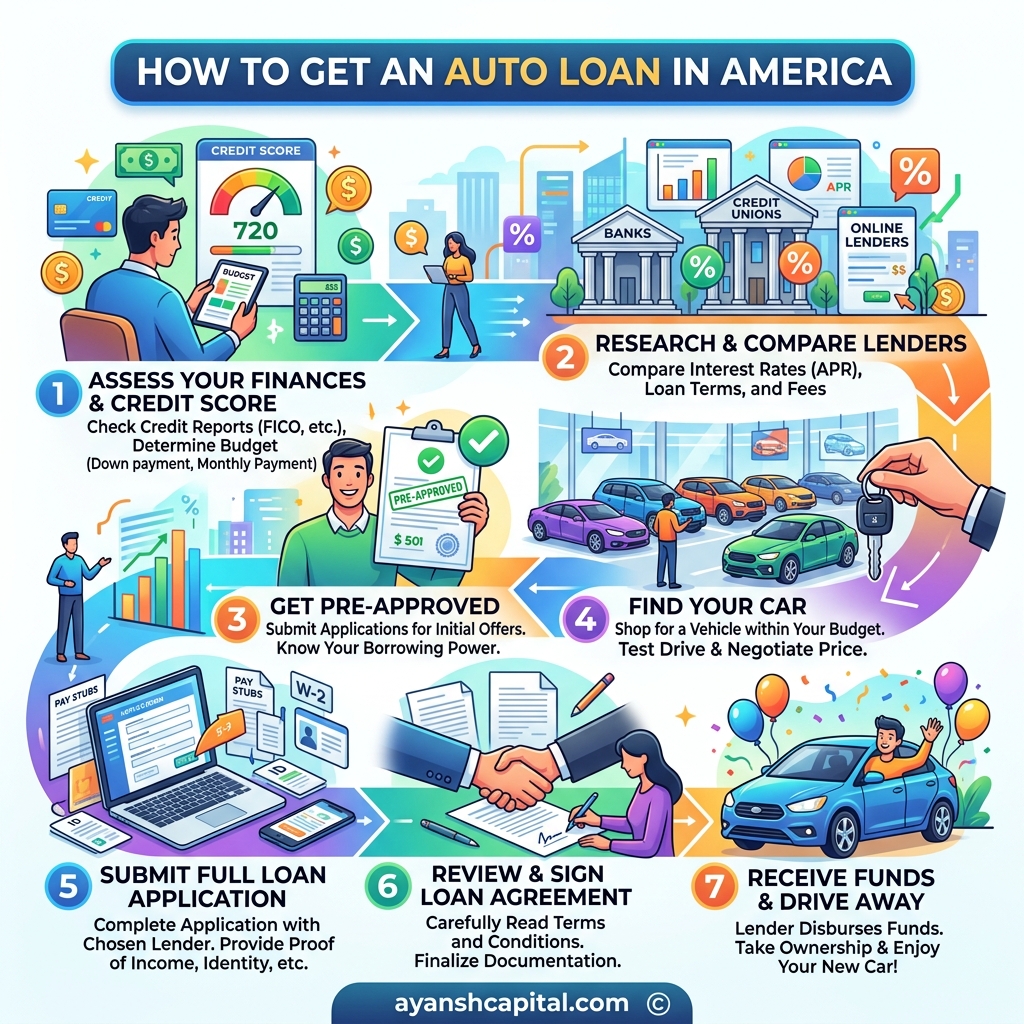
1. Credit Score (FICO Score): My Financial Identity
- I quickly learned that my credit score (ranging from 300 to 850) dictated my family’s financial freedom. I knew that having a Super Prime score (780 to 850) meant getting a 4% to 5% rate, keeping more money at home for family vacations.
- Prime (661 to 779) was fine, but I knew that dropping to Non-Prime (601 to 660) meant 8% to 10% rates that would severely strain our grocery budget.
- I avoided Subprime (under 600) at all costs, having seen how 15% to 20% rates trap hardworking parents in a devastating, inescapable cycle of debt.
2. APR (Annual Percentage Rate): The Real Cost of Debt
- I learned never to just ask the dealer for the “Interest Rate.” That surface number is a trick because it hides origination fees and dealer charges.
- A promised 5% rate can realistically become a 6.5% APR once those hidden fees are silently added to the paperwork. Always demanding to see the exact APR prevented me from being tricked into paying thousands extra over the life of the loan.
3. DTI (Debt-to-Income Ratio): Balancing Life and Debt
- Finally, the DTI showed the bank how much of my paycheck was already eaten up by our house rent and credit cards. Banks fear giving loans to anyone whose DTI is over 36% to 43%.
- I strictly kept my old debts below 36% before calculating how much car can I afford. I knew that if an unexpected job loss ever happened, keeping my DTI low meant we wouldn’t instantly lose our home or our car.
My Final Thoughts
By honoring these personal boundaries, I finally found the absolute best answer to how much car can I afford, ensuring my loved ones enjoyed a beautiful, safe ride without ever sacrificing our financial independence.
To secure a safe auto loan for my family, I made sure my credit score was strong, demanded the true APR, and kept my existing debts low.
Understanding the Out-The-Door (OTD) Price When Asking how much car can I afford
- When I walked into the dealership holding my son’s hand to buy a safe family car, I saw a massive sticker on the window showing the MSRP. It was the shiny, tempting price they flash on TV to lure hardworking parents in.
- But an older, wiser friend had warned me that you never actually take the car home for that sticker price. This harsh truth completely threw off my plans when trying to figure out how much car can I afford on my limited salary.
- I realized that the real, final price—the one I actually had to write a check for—is called the “Out-The-Door” (OTD) price. To a father like me, OTD simply means the total amount of money leaving our family bank account, money I worked late-night shifts to earn.
- To be a responsible husband and truly know how much car can I afford without dipping into my wife’s medical emergency fund, I had to look closely at the sneaky charges they add. Here is my personal experience with the 5 major parts of the bill:
1. The Starting Line (MSRP / Negotiated Price)
- This was the biggest chunk of my bill. I learned quickly that the MSRP is just a “suggestion” from the factory, not a final verdict.
- I promised myself I wouldn’t pay full price. By stubbornly negotiating this starting number down, I created a much safer base price. This victory deeply impacted how much car can I afford, leaving enough money left over to pay for my daughter’s upcoming school trip.
2. State Sales Tax: The Silent Burden
- I quickly discovered that taxes drain a massive part of your savings, and it completely depends on where your family lives.
- This was the second-largest part of my bill, and sadly, I couldn’t bargain on it. Living in a high-tax state meant handing over an extra $2,175 on a $30,000 car—money that could have easily covered six months of our household groceries.
- My cousin in Oregon pays 0% sales tax, which completely changes the reality of how much car can I afford for his family compared to my daily struggles.
3. Registration & Title Fees for Legal Peace of Mind
- To legally own the car and drive my kids to their doctor’s appointments safely, I had to pay the government’s DMV fees.
- The dealers filled out the paperwork for me but happily passed the cost directly onto my OTD bill.
- It included my proof of ownership and license plates—just another harsh reality of buying a car that I had to silently accept.
4. Documentation Fees: Paying Them to Print Paper
- This fee covers the dealer’s back-office paperwork. I felt sick realizing I was paying them hundreds of dollars just to print my contract.
- In some states, the government limits this fee to $80 to protect families. But in my area, dealers freely charge up to $1,000! Knowing that a thousand dollars of my sweat and blood was going straight into the dealer’s pocket made me furious, and it severely limited how much car can I afford.
5. The “Forced Extras” Trap: Protecting My Hard-Earned Savings
- This was the exact moment I almost got scammed. Dealerships sneak in useless extras like cheap window tint or “paint protection” just to steal more money from tired buyers.
- A smooth-talking salesman tried charging me $250 for basic floor mats that I could easily buy online for $50! That $200 difference was exactly the cash I needed for my son’s dental braces this month.
- I stood my ground, looked him in the eye, and told him to remove those add-ons. When he argued “they’re already installed,” I simply replied, “I won’t pay for them,” fiercely protecting my family’s savings.
The Biggest Negotiation Strategy: OTD vs. EMI for how much car can I afford
- The absolute most important lesson I learned to protect my loved ones: never, ever negotiate based on the monthly installment (EMI).
- When I sat across the desk, the salesman’s very first trap was asking, “Ayaansh, what monthly payment feels good for your family?” If I naively said, “I want a $400 payment,” he would secretly stretch the loan to 7 long years, crank up the hidden fees, and magically hit that $400 mark. I would walk out feeling proud, not realizing I’d be drowning in debt long after the car started breaking down.
- The Right Way: I refused to play his game. I calmly said, “I am only negotiating on the final Out-The-Door price. Please give me an honest, clear breakdown.”
- By demanding the truth, he couldn’t hide any shady fees in the shadows. With a clear paper in front of me, I stripped away the junk and made a safe, honest choice for my family’s future.
Managing Insurance, Fuel, and Maintenance When Asking how much car can I afford
- When I first started looking for a car in the USA, I almost made a huge mistake. I thought my only expense would be the monthly bank payment, completely forgetting that a car needs constant feeding to keep running.
- A car isn’t just a piece of metal sitting in the driveway; it’s a daily part of the family that constantly needs money to safely drive my wife and kids around. Realizing this forced me to seriously rethink how much car can I afford.
- I learned that the “10” in the 20/4/10 rule is an absolute lifesaver for fathers like me. It means the total cost of my loan, insurance, gas, and repairs must never cross 10% of my monthly paycheck, ensuring my kids never have to compromise on their everyday needs.
1. Auto Insurance: Protecting My Family on the Road
- Driving is a privilege, but my biggest worry was keeping my loved ones safe on those fast, busy highways without going completely broke.
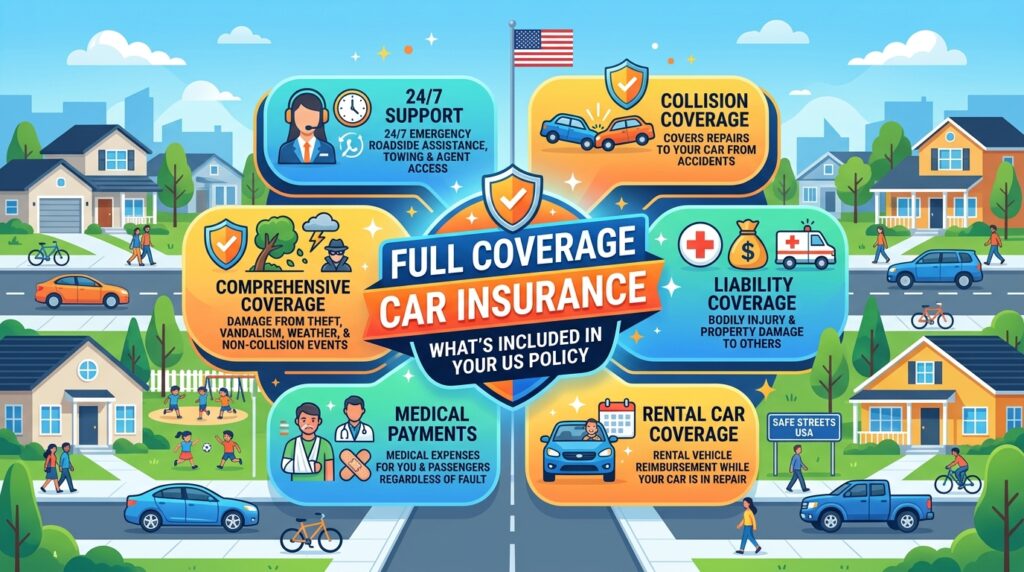
- When I took a loan to buy the car, the bank legally forced me to buy expensive ‘full coverage insurance’. They just wanted to protect their money until my debt was cleared, but paying those high monthly bills directly changed how much car can I afford.
- From my personal experience, this easily drains $100 to $300 a month from our household. It broke my heart to realize that my slightly lower credit score, and living in a busy city, made my family’s rates so painfully high.
- I also quickly noticed that dreaming of a flashy luxury sports car meant sky-high insurance compared to a humble, safe family sedan that actually fits my life.
2. Gas and Fuel: Fueling Our Daily Lives
- Without gas, my car is just a useless box, completely unable to take my kids to school or drop my wife at her office.
- My daily drive to work and our weekend grocery runs easily add up to 1,000 miles a month. For my family, that’s another $100 to $150 vanished from our hard-earned savings.
- I realized that buying a massive, gas-guzzling truck would double that burden. Instead, I chose a reliable, fuel-efficient car to strictly stay under the 10% rule and safely answer how much car can I afford without stealing from our grocery money.
3. Maintenance and Repairs: The Unseen Burdens
- Every machine breaks down eventually. I had to face the harsh reality of routine oil changes, worn-out brake pads, and replacing the battery so my family wouldn’t get stranded on a dark, snowy road.
- Just replacing all four tires safely cost me nearly $800! If I hadn’t planned for it, that single repair bill would have completely wiped out our monthly household budget.
- My secret weapon was creating a “Dad’s repair jar”—a separate savings account where I hide away $50 to $75 a month just for the car. When our car broke down suddenly, I used this emergency cash so our lives weren’t ruined, protecting my honest truth about how much car can I afford.
Final Thoughts on Family Freedom and how much car can I afford
- Choosing the right car for my family wasn’t just math; it was a battle against temptation. Walking into those shiny showrooms with the sweet smell of a new car almost made me sign away my family’s financial security for a luxury we didn’t truly need.
- I constantly remind myself that a car is not an investment like our family home. Its price drops like a rock the second I drive it off the lot. Trapping my hard-earned night-shift money in a rusting piece of metal is a terrible choice for my kids’ future.
- My absolute safety net became the 20/4/10 rule. Saving up that 20% cash down payment, keeping the loan to a short 4 years, and locking my total expenses under 10% kept my feet firmly on the ground.
- Before I even looked at a dealer, I walked in with my own bank pre-approval and a stubborn Out-The-Door price already decided in my head.
- In the end, I realized that a beautiful luxury car that empties my bank account every month would only bring me sleepless nights and arguments with my wife. A modest, reliable car gives me the ultimate peace of mind. I proudly chose my family’s happiness over looking rich on the streets when finally deciding how much car can I afford.
10 Honest Q&A: Protecting Your Family While Buying a Car
Question 1: What does the “10%” in the 20/4/10 rule really mean for my family? Answer: It’s a promise I made to my wife. Our car payment, full insurance, gas, and repairs together must never cross 10% of my total paycheck. It ensures our kids always have healthy food on the table while safely answering how much car can I afford.
Question 2: If I take a bank loan, do they force me to buy expensive full coverage insurance? Answer: Yes. Because the bank technically owns the car until the last penny is paid, they demand full protection for their money in a crash. It hurts our monthly savings, but as a dad, I just accept it to keep my family safely on the road.
Question 3: What does it mean when people say a family is “Car Poor”? Answer: It’s a heartbreaking reality. It means a father spent so much on a shiny car to look rich to the neighbors, that he now cries at night wondering how he will pay for his kids’ school fees and home rent.
Question 4: Is buying a brand-new car a smart investment for my children’s future? Answer: Not at all. A house builds wealth, but a car is just a piece of metal that loses up to 20% of its value the minute I drive it home to my kids. It’s a basic necessity for my job, not a magic ticket to get rich.
Question 5: Why do I need to hide away $50 to $75 a month for car repairs? Answer: Because waking up to a dead battery or a blown tire shouldn’t mean canceling my daughter’s birthday party. A small “Dad’s repair jar” stops the panic and keeps my true limits on how much car can I afford completely safe.
Question 6: Salesmen smile and push 72 or 84-month loans. Should I trust them? Answer: Never. It’s a sweet-sounding trap. The monthly bill looks cheap, but you’ll silently bleed thousands in extra bank interest. Worse, I’d still be paying the bank long after the car starts breaking down. I protect my family by keeping loans to 48 months (4 years) max.
Question 7: How does getting a “Pre-approval” from my bank protect my family? Answer: Walking into a dealership with my own bank’s approval is like wearing armor. I already know my honest interest rate (APR), so the smooth-talking salesman can’t trick me with hidden fees when I finally sit down to decide how much car can I afford.
Question 8: How does a bad credit score hurt my family’s dreams? Answer: It’s brutal. Banks look at a low score and punish us with 10% to 20% interest rates, stealing the cash we need for basic living. When times are tough like that, I’d rather wait or buy a cheap used car in cash than put my wife through financial stress.
Question 9: If my long drive to work eats up $300 a month in gas, does the 10% rule still matter? Answer: Yes, even more! If I have to burn $300 just to get to the office, I must swallow my pride and buy a much cheaper car. I’ll willingly lower my monthly bank payment just to keep my total spending under that safe 10% line for my kids’ sake.
Question 10: Can I argue with the dealer to lower the State Sales Tax on the final Out-The-Door (OTD) price? Answer: No, the government always takes its exact cut, and DMV fees are fixed. As a smart father, I save my energy to fight the salesman on the actual car price (MSRP) and fiercely refuse their fake, over-priced floor mats to protect my hard-earned wallet.