

Travelers Car Insurance Discounts to Lower Your Premium ✅
My Honest Take on Travelers Car Insurance: Is the “Red Umbrella” Right for You?
Let’s be real for a second—shopping for car insurance is probably right up there with going to the dentist. It’s not exactly fun, but we all know we need it. If you’ve watched TV lately, you’ve definitely seen the Travelers Car Insurance “Red Umbrella” commercials. It’s a great symbol. It feels safe, comforting, and promises to protect you when life gets messy. But as someone who spends way too much time reading the fine print of insurance policies so you don’t have to, I always want to know what happens after the commercial ends.
When you look under the hood, Travelers Car Insurance is genuinely a fantastic, historic option (they’ve been around since 1853!), but I’ve noticed they have a very specific “sweet spot.” Let’s sit down and chat about what they do brilliantly, and a couple of little quirks you should know about before you sign on the dotted line.
Where They Really Shine (The Good Stuff)
- The 5-Year “New Car” Perk (This is huge!): I’ll be honest, this is my absolute favorite thing they offer. If you just bought a brand-new car, their Premier New Car Replacement® is a lifesaver. If the unthinkable happens and your new car is totaled, they don’t just give you a check for its depreciated value. They actually buy you a brand-new exact match. The best part? They offer this for the first 5 years you own the car! Most companies only offer this for the first year.
- They Are Financially Bulletproof: They hold an A++ (Superior) rating from AM Best. I know financial ratings sound a bit boring, but here is why it matters to your family: If a severe storm or wildfire hits your area, you want an insurance company that has plenty of cash reserves to pay everyone’s claims quickly and fairly without stressing out.
- The Bundling Bonus: If you own a home, they will love you. They are incredibly generous with their discounts if you bundle your auto and home policies together. It’s one of the easiest ways to shave a nice chunk off your monthly bill.
A Few Things to Keep in Mind (The Quirks)
- The IntelliDrive® App Catch: Like many companies today, they offer a smartphone app that tracks your driving to give you a discount (up to 30%). It’s a great tool if you are a super cautious driver! But here is a friendly heads-up: in many states, if the app notices hard braking or if you frequently drive late at night, it can actually increase your rate. So, if you work the night shift or have a slightly heavy foot, you might want to politely decline the app.
- The Old-School Approach: This is a massive, established company, which means they sometimes still rely on the “personal touch.” While their app is decent, making complex changes to your policy often requires calling up your local independent agent. Some people love having a dedicated human to talk to, but if you prefer doing 100% of your life online without making a phone call, this might take a little getting used to.
- The Discount Ceiling: Even if you qualify for every discount under the sun—safe driver, good student, homeowner—they do have a cap on how much you can save (usually around 35% to 45%). You’ll get a great rate, but just know there’s a limit to the magic!
My Final Thoughts: At the end of the day, Travelers Car Insurance is a wonderful choice for a lot of people. If you just drove a new car off the lot, own a home, and consider yourself a pretty safe driver, I highly recommend getting a quote from them. They are reliable and will absolutely take care of you when you need that red umbrella.
Car Insurance Company Comparison with Travelers Car Insurance: All You Need to Know
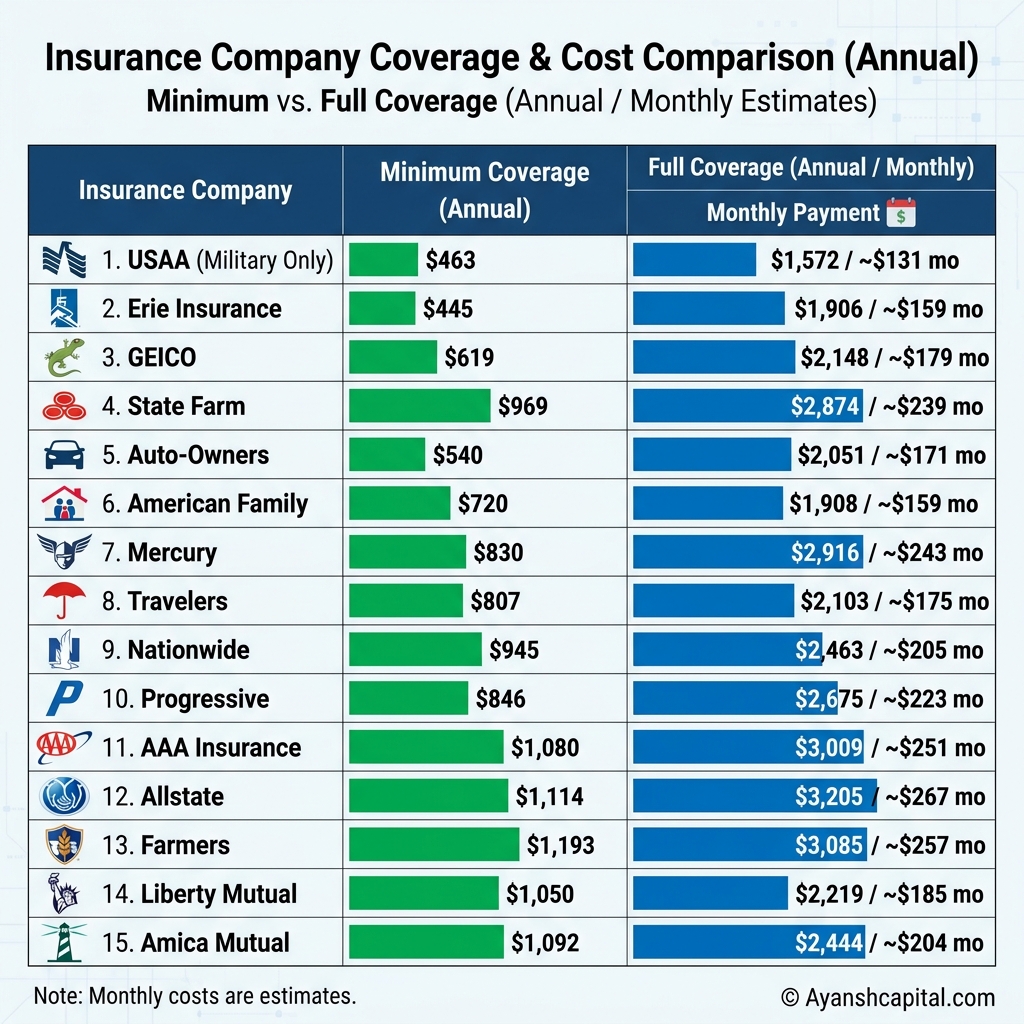
America’s “Top 20 Giants” (The Big 20)
This group controls over 95% of the entire US auto insurance market.
Inside Your Travelers Car Insurance Policy: What to Buy and What to Skip
Let’s not sugarcoat it. Reading through a 40-page auto insurance policy is nobody’s idea of a fun afternoon.
It’s packed with acronyms—BIL, PDL, PIP—that look like absolute alphabet soup. But here’s the harsh truth: understanding what those little letters mean is the only thing standing between a minor inconvenience and a complete financial disaster if you ever get into a wreck.
I’ve gone ahead and translated the entire Travelers Car Insurance coverage menu into plain, everyday English. Here is exactly what you need to buy, what you can safely skip, and how to set up your policy to protect your hard-earned money.
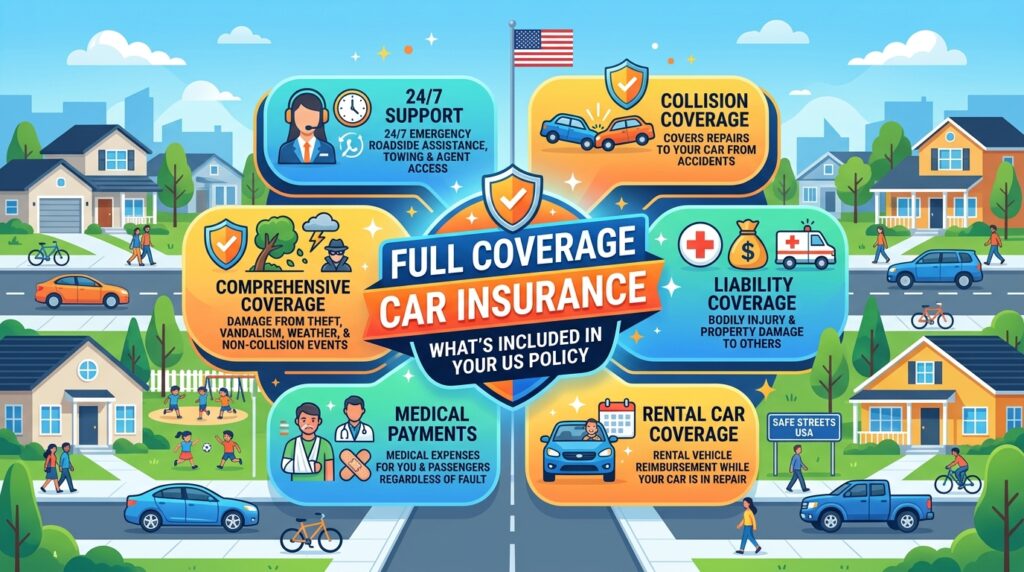
1. The Ultimate Financial Safety Net (Liability Coverage)
If you cause an accident, this is your shield. It’s the only thing protecting your house and your savings from a nasty lawsuit. It’s absolutely mandatory. But how high you set the limits? That’s entirely up to you.
Bodily Injury Liability (BIL): This pays for the other driver’s hospital bills and rehab. Your state will tell you that you only need a “minimum” amount of coverage.
My golden rule? Do not listen to them. Seriously. A low limit can drain your personal assets in a heartbeat if a lawyer decides to sue you. Bump this up.
Property Damage Liability (PDL): This pays for the physical things you hit. Cars, fences, buildings.
Have you seen the repair costs for a modern SUV or a luxury EV lately? A $10,000 state minimum won’t even cover a scratched bumper on a new Tesla. Do yourself a massive favor and carry at least $100k here. Just consider it sleep-at-night insurance.
2. Protecting Your Own Vehicle (Physical Damage)
Collision Coverage: You hit a pole, or maybe you rear-end another car. This coverage pays to fix your car. It’s that simple.
But here is a smart insider trick to lower your monthly bill: if you have a solid emergency fund sitting in your bank account right now, ask your agent to raise your deductible from $250 to $1,000. Stop paying the insurance company extra money every month just to hold onto your own cash.
Comprehensive Coverage: I always call this the “bad luck” coverage. It kicks in when your car gets stolen, damaged by a freak hail storm, or vandalized in a parking lot.
Oh, and yes! If a deer jumps out in front of you on a dark country road, that actually falls under Comprehensive, not Collision.
3. Guarding Yourself Against Uninsured Drivers & Medical Bills
It’s a wildly frustrating statistic, but roughly 1 in 8 drivers on US roads right now are driving around with absolutely zero insurance.
If one of them hits you and speeds off, Uninsured/Underinsured Motorist (UM/UIM) coverage steps in to pay your bills so you aren’t left holding the bag.
Then there is the medical side of things:
- Medical Payments (MedPay): This is arguably the absolute best value on your entire policy. If you need an ambulance or emergency X-rays, MedPay covers the bill instantly. You don’t have to fight with your regular health insurance company or meet their massive deductibles first.
- Personal Injury Protection (PIP): If you happen to live in a “No-Fault” state like NY, FL, or MI, this is required by law. But honestly, PIP is amazing. It covers your medical bills, plus your lost wages, and even childcare while you recover.
- A quick money-saving trick: If your state allows it, tell your agent to make your PIP “secondary” to your main health insurance. It’s an incredibly easy way to lower your premium.
4. The Smart Upgrades (Add-Ons That Are Actually Worth It)
I usually advise people to be super careful with policy add-ons so they don’t overspend. But there are a few specialty options within Travelers Car Insurance that I genuinely highly recommend adding to your cart:
- The 5-Year New Car Cheat Code: The second you drive a new car off the lot, it loses thousands in value. If you total it a year later, most companies only pay that depreciated value. Travelers’ Premier New Car Replacement actually buys you a brand-new exact match. The best part? They let you keep this coverage for your first 5 years of ownership, whereas most competitors quietly drop it after year one.
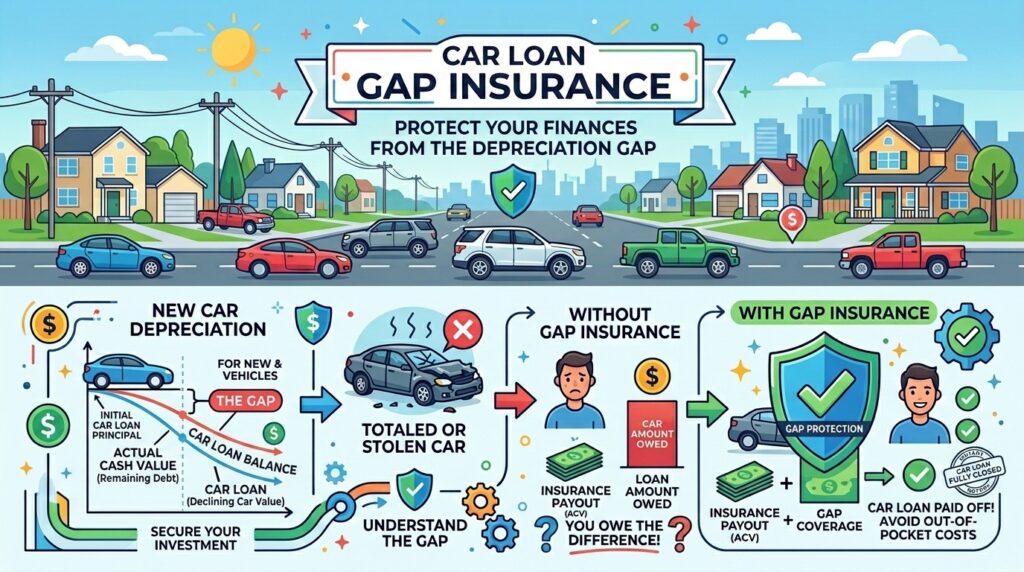
- Loan/Lease Gap Insurance: Did you finance your car for 60 or 72 months? You absolutely need this. Gap pays the massive difference between what your totaled car is actually worth and what you still owe the bank. Without it, you could be stuck making a $400 monthly payment for a car that’s currently crushed in a scrapyard.
- Rideshare Coverage: If you drive for Uber, Lyft, or DoorDash, your personal auto policy drops your coverage the very moment you turn on the driver app and wait for a request. Travelers Car Insurance offers a specific add-on to close this dangerous “Period 1” loophole. Trust me, get this so you never face a terrifying denied claim.
Stop Overpaying: How to Slash Your Travelers Car Insurance Bill
I need to be completely honest with you. Paying for car insurance every month feels like throwing money into a bottomless pit.
But after spending years looking at how policies are priced, I realized something. It’s all just a giant math game. If you know exactly which buttons to push, you can force the algorithm to drop your rate by hundreds of dollars.
I’ve completely torn apart the Travelers Car Insurance discount menu to see what actually works. Forget the generic, boring advice your parents gave you. Here is exactly how to game the system and keep your own hard-earned money.
The $15 “Fake” Bundle Trick We all know bundling saves money. But what if you rent an apartment or live with roommates?
Here is the ultimate loophole. Buy a dirt-cheap Renters policy. It usually costs like $15 a month. Just attaching it to your auto policy triggers a massive bundle discount on your Travelers Car Insurance. Most of the time, the discount is so huge that the renters policy completely pays for itself, and you actually make a profit. It’s brilliant.
Surviving the “Teenager Tax” If you have a teenager who just got their license, I am so sorry for your bank account. It is going to hurt.
But please, never buy them their own standalone policy. Add them to your master household policy to trigger the Multi-Car discount.
Then, hound them about their grades. A 3.0 GPA knocks up to 15% off the bill. And if they go away to a college that is more than 100 miles away and leave their car at home? Tell your agent immediately. Stacking the “Good Student” and “Away at School” discounts will essentially cut that terrifying youth premium right in half.
One Mistake Can Ruin You (Protect Your Record) If you haven’t had a ticket or crash in five years, you are sitting on a massive 25% safe driver discount.
But we are human. We make mistakes.
One minor speeding ticket can wipe out that entire 25% discount overnight. Do yourself a massive favor and ask your agent to add the “Responsible Driver Plan.” It gives you minor violation forgiveness. It’s basically a cheap insurance policy for your insurance discount.
Also, if you are switching to Travelers Car Insurance from a competitor like GEICO, do not let your coverage lapse. Not even for 24 hours. A single-day gap deletes your “Continuous Coverage” discount and flags you in the national database as a high-risk driver.
Stop Paying the “Poor Tax” Did you know companies secretly charge you a $2 to $7 fee every single month just for the “privilege” of paying monthly?
Stop letting them nickel and dime you.
If you can swing it, pay your entire 6-month or 12-month bill upfront. It instantly kills those junk installment fees and triggers a Paid-in-Full discount. If you can’t afford that, at least link your checking routing number for auto-pay and switch to paperless billing to scrape back a few bucks.
The 7-Day Quoting Secret Never buy a Travelers Car Insurance policy on the exact day you need it.
The computer algorithm looks at last-minute buyers and assumes they are disorganized and irresponsible, which means a higher price. If you get your quote just one week before you actually need it, the system automatically applies an “Early Quote Advantage” discount. You save up to 11% just for not procrastinating!
The Boring $30 Investment Spend four hours on a Saturday taking a state-approved Defensive Driving course online. It costs about 30 bucks.
Yes, it is incredibly boring.
But it locks in a solid discount for 36 consecutive months. It’s the easiest return on investment you will ever make. And if you have an older car (pre-2010), force your agent to manually check the system to ensure you are getting your Anti-Lock Brake and Airbag discounts. Sometimes they get lazy and leave those boxes unchecked.
To Track or Not to Track? Travelers has the IntelliDrive app that tracks your speed, braking, and phone usage for 90 days. You get 10% off just for downloading it, and up to 30% off later if you drive like a saint.
But let me warn you right now.
If you have road rage, or you live in a city with insane stop-and-go traffic, skip this. Poor scores will literally increase your premium in some states. It’s amazing for remote workers who barely leave the house, but it is a total trap for aggressive drivers.
The Reality of “Discount Stacking” Can you stack all of these tricks and get free insurance?
No. That’s a myth. Every state has a “Maximum Discount Cap,” usually stopping around 40%.
But let’s look at reality. Imagine a 22-year-old staring down a brutal $2,000 annual bill for Travelers Car Insurance.
If they use the $15 renters hack (12%), show a good GPA (10%), quote a week early (5%), and use Auto-Pay (3%), that painful $2,000 bill suddenly melts down to a very manageable $1,400.
Full Coverage Top 15 Auto Insurance Rate Comparisons
Below is a detailed breakdown of Top 15 Car Insurance average annual rates for full coverage auto insurance across various driver profiles, compared directly against the national average.
Top 15 Car Insurance Rates by Age & Experience
In the auto insurance industry, age and driving experience heavily dictate your premium. As you gain experience and your statistical risk of accidents decreases, Top 15 Car Insurance Rates by Age & Experience. Here is a quick breakdown of how age impacts your premium:
I Pushed the Travelers Car Insurance App to Its Limits. Here’s the Unfiltered Truth.
Let me confess something: I have a serious love-hate relationship with insurance apps. Most of them are just useless pieces of junk that take up storage space on your phone until you get into a crash.
But recently, I decided to aggressively test the Travelers Car Insurance digital app. I wanted to see if it’s actually useful, or just another corporate gimmick. What I found was a mix of genuinely brilliant time-savers, a few incredibly frustrating bugs, and a couple of loopholes you can absolutely exploit to save money.
Grab a cup of coffee. Here is exactly what happens when you actually use this app in the real world.
1. The Panic-Free ID Card (MyTravelers® Portal)
Picture this: You get pulled over. Your hands are shaking, the police officer is tapping on your window, and you are frantically digging through your glovebox for a paper ID card. We’ve all been there.
The app fixes this by letting you log in with FaceID to instantly pull up your digital card. It’s a lifesaver.
But I have to warn you about their server maintenance. They love updating their system late on Sunday nights. If you get pulled over at 2 AM on a Sunday, the app might just give you a blank error screen. My absolute best advice? The second you buy your policy, click the button to add that digital ID card to your Apple or Google Wallet. That way, you have it offline, no matter what their servers are doing.
2. The IntelliDrive® Tracker (A Blessing and a Curse)
This feature tracks your driving for 90 days and promises a 30% discount if you drive safely. Sounds great, right?
Here is what they don’t tell you: it runs in the background and absolutely devours your phone battery. Expect your phone to die 15% faster every day.
Also, if you work a night shift, do not use this! The algorithm is incredibly harsh and actively punishes you for driving between midnight and 4 AM. It will literally increase your premium just because you work late. Skip it if you are a night owl.
3. Taking AI Photos of Your Smashed Car
This feels like living in the future. If you get into a fender-bender, you take a few 3D photos of the dent, and their AI gives you a repair estimate in hours. You don’t have to wait three days for a grumpy adjuster to show up at your house.
But here is the infuriating part: the AI is a complete perfectionist.
If you take the photo at dusk, or if your car is covered in winter mud, the AI will throw a tantrum and reject the claim. Always take these photos in bright, clear daylight and take both close-ups and wide shots so the computer doesn’t get confused.
4. The Uber-Style Tow Truck
Being stranded on the side of the highway is terrifying. Thankfully, Travelers Car Insurance built a roadside feature that works exactly like Uber. You tap a button, and it shows you a live map with the exact name of the tow truck driver and when they will arrive.
It completely eliminates that awful feeling of wondering, “Are they actually coming?”
Just one warning: if your car breaks down in the middle of a rural cornfield with weak cell service, that live map will freeze. But always request the tow through the app anyway, because it beams your exact GPS coordinates to the driver.
5. The Auto-Pay Trap
You can save about 3% on your bill and drop those annoying $5 installment fees by linking your checking account for auto-pay. Do it.
But please, learn from the nightmare stories of others. Do not link your debit card. Debit cards expire, get lost, or get locked by fraud alerts. If your card fails, Travelers doesn’t just cancel the payment—they slap you with a massive $35 Non-Sufficient Funds (NSF) fee. Always link your actual bank routing number instead.
6. The “Dealership Sneak Attack” (VIN Scanner)
This is my favorite secret weapon. You can literally stand in a dealership lot, point your phone camera at a car’s window barcode (the VIN), and the app will spit out exactly what it will cost to insure that car in 60 seconds.
Here is how to game the system: If you find the car you want, scan it and request the quote at least 5 days before you sit down to sign the dealership papers. This triggers a hidden 10% “Early Quote” discount on your Travelers Car Insurance premium.
7. Finding a Mechanic You Can Trust
If you need repairs, the app has a GPS locator that points you to certified network shops.
Use them. Seriously. If you use a network shop, Travelers gives you a lifetime warranty on the repair. More importantly, if the mechanic takes off your bumper and finds $2,000 worth of hidden damage, Travelers pays them directly without arguing. It makes the entire nightmare so much smoother.
8. The Introvert’s Dream (Digital Endorsements)
If you are like me and hate talking on the phone, managing a Travelers Car Insurance policy online is an absolute dream. You can add a new driver or change your deductibles at midnight from your couch.
A cheeky little money-saving trick: Going to Europe for a month? Leaving your car locked safely in a garage? Use the app to temporarily drop your Collision coverage while you are gone. It slashes your bill for that month. Just set a reminder on your phone to add it back the day you fly home!
9. Fighting with “Emma” the AI Chatbot
We all despise customer service chatbots, and Travelers’ bot, “Emma,” is no exception. She’s fine if you just want a copy of your ID card. It saves you from sitting in a 20-minute phone queue.
But if you ask her a complicated legal question, she will trap you in a frustrating, endless loop of automated responses.
The escape code: The second she starts getting confused, just type “Live Agent.” It immediately kills the bot and connects you to a real human from Travelers Car Insurance.
10. The Teenager Spying Dashboard
If you have teenagers, this app has a master dashboard that shows you exactly how your kids are driving (using the IntelliDrive scores).
Naturally, your teenagers will view this as a massive invasion of privacy and will probably hate you for it.
Don’t use it to yell at them for braking too hard. Turn it into a game. Tell your family that whoever has the highest safety score at the end of the month gets their favorite dinner or a prize. It keeps the peace in the house, makes them better drivers, and secures that massive household discount on your Travelers Car Insurance.
Under the Hood: The Ugly Truth About the App Algorithm and Their Financial Vault
Let’s be brutally honest. Most of us just download the insurance app, pay the monthly premium, and completely forget about it.
But if you want to know how the algorithm is secretly judging your driving skills—and more importantly, if the company actually has the cash to pay you after a catastrophic disaster—you have to look at the raw, unfiltered data.
I spent the weekend digging through the actuarial math and financial spreadsheets of Travelers Car Insurance. Let’s skip the boring Wall Street jargon. Here is the actual truth about how they track you, and how safe your money really is.
1. The App’s Secret Algorithm
The “Hard Braking” Math (It’s Not Just a Guess) Ever wonder what the app actually considers a “hard brake”? It’s a very specific equation. The computer flags you if your car drops more than 7 mph in a single second.
Why are they so obsessed with this? Because their data reveals a terrifying reality.
If the app catches you slamming on your brakes three or more times a day, you are statistically 400% more likely to get into a crash within the next six months. Let that sink in. 400 percent.
The fix here is stupidly simple. Stop tailgating. If you just leave a bigger gap between your bumper and the car in front of you, you naturally stop hard-braking. Your app score stays high, and your Travelers Car Insurance bill stays low.
The Paranoia: Are They Reading My Texts? People ask me this all the time. They are convinced the app is secretly listening to their phone calls or reading their text messages.
It absolutely is not.
The reality is much simpler. The app just taps into your phone’s internal gyroscope. If your car is moving faster than 10 mph and the physical phone is tilting or moving in your hand while the screen is on, the algorithm heavily penalizes you for “distracted driving.”
That’s it.
If you lock the phone in a dashboard mount for GPS or use your car’s Bluetooth to talk, your score is perfectly safe. Just keep the glass out of your hands while the car is moving.
2. The Money: Are They Actually Bulletproof?
You don’t buy a Travelers Car Insurance policy just because they have a neat little app. You buy it so that if a massive wildfire or a Category 5 hurricane completely levels your town, they can actually afford to write you a check. Let’s look at their report card.
AM Best gives them an A++ (Superior) rating. They have held this exact top-tier score for 15 straight years, which basically means they have a near-zero percent chance of going bankrupt.
But what about their actual cash?
By law, insurance companies are required to keep a minimum amount of cash on hand to pay out claims. Travelers currently has a Solvency Capital Ratio of over 210%.
This is massive.
It means they are hoarding more than double the legally required cash. We are talking about billions of dollars in pure, liquid surplus sitting in a vault, ready to be deployed the second a disaster strikes. Even if the stock market crashes tomorrow, your Travelers Car Insurance policy is backed by an absolute financial fortress.
3. Do They Actually Care About Customers?
A company can have all the billions in the world, but it doesn’t matter if they refuse to pick up the phone when you are crying on the side of the highway. Here is how they treat real, frustrated human beings.
The NAIC Complaint Index (The Golden Metric) This is my absolute favorite metric in the entire insurance industry. The national average for consumer complaints is always set at a flat 1.00.
Travelers scores a 0.62.
Think about that. They receive nearly half the amount of angry complaints compared to a normal, average insurance company. That is incredibly rare.
J.D. Power and the BBB They also hold a fantastic 871 out of 1000 with J.D. Power for auto claims. That score recently jumped up by 12 points simply because they updated their app to make uploading claim photos so much easier.
Finally, they boast a flawless A+ rating with the Better Business Bureau (BBB). This means that when a customer does get angry, Travelers Car Insurance actually works to fix the problem fast, rather than forcing you to drag them into a messy courtroom.
Travelers Car Insurance (50-State)
The Hidden Fees and App Traps: What’s Really Increasing Your Premium
Nobody likes opening their auto insurance bill and seeing a number higher than they expected.
It feels like a scam.
But usually, it’s not a random price hike. It’s a hidden fee or a silent algorithm penalty. After digging deep into the fine print, I’ve uncovered exactly how the system quietly drains your wallet. Here is the unfiltered truth about the extra charges on your Travelers Car Insurance policy, and exactly how to beat their tracking app.
Part 1: The Extra Administrative & Penalty Charges
1. Administrative & Billing Fees (The “Poor Tax”) Companies secretly charge you up to $10 a month just to pay your bill in installments, plus another $5 just to mail you a paper statement.
Stop doing this.
Pay in full upfront if you can. If not, switch to EFT Auto-Pay and paperless billing to drop these junk fees to zero. But watch your bank balance—a bounced auto-pay triggers a brutal $40 NSF fee plus a late fee! Also, never call an agent to make simple policy changes (like adding a car). Use the digital app. Calling a human can trigger a $15 “Endorsement Surcharge.”
2. Penalty & Claims-Related Surcharges Thinking about leaving for a competitor in the middle of the year?
Don’t do it.
Canceling your Travelers Car Insurance policy early triggers a “Short-Rate Penalty” where you legally lose 10% of your remaining premium. Wait for your exact renewal date. Also, if you get into a crash, always use a certified network mechanic. If your favorite local shop charges too much for labor, the insurance won’t cover the difference—you will pay it out of pocket.
Part 2: How the IntelliDrive Scoring System Actually Works
You downloaded the telematics app hoping for a massive discount. But if you don’t understand the algorithm’s math, it will absolutely increase your Travelers Car Insurance premium. Here are the 10 ways the app judges you, and how to beat it:
1. Hard Braking (40% Weight – The Biggest Trap) This is the single biggest factor. The computer triggers a massive penalty if your speed drops more than 7 mph in a single second. The Hack: Stop tailgating. Leave a solid 3-second gap behind the car in front of you so you can let your car decelerate naturally.
2. Time of Day (20% Weight – The Night Owl Penalty) Do you work a night shift? The algorithm hates you. Driving between midnight and 4 AM is heavily penalized. The Hack: If you regularly drive at night, simply do not enroll in this program.
3. Rapid Acceleration (15% Weight) Jack-rabbit starts when the traffic light turns green will kill your score. The Hack: Accelerate gradually and smoothly. Drive like your grandmother is holding a bowl of hot soup in the passenger seat.
4. Distracted Driving (15% Weight) The app tracks your phone’s internal gyroscope. If you are driving over 10 mph and unlocking or holding your phone, your score plummets. The Hack: Put the phone in a dashboard mount and use Siri or Google Assistant. Do not touch the physical glass.
5. Speeding Limits (10% Weight) Consistently driving 10 to 15 mph over the local posted limit is a major red flag. The Hack: Rely on your car’s cruise control on the highway to lock your speed and prevent accidental speeding.
6. Cornering Intensity (5% Weight) Taking a turn too fast (generating more than 0.3G of lateral force) hurts your score. The Hack: Slow down at least 50 meters before reaching an intersection or a sharp curve.
7. Continuous Rolling Stops (5% Weight) Rolling through a STOP sign at 2 mph instead of coming to a dead stop? Penalty. The Hack: Come to a complete, absolute 0 mph stop at every sign and count to two seconds before moving again.
8. Total Mileage Exposure (Informal Modifier) Driving more than 5,000 miles within the 90-day tracking window is risky. The Hack: High mileage amplifies the penalty for even minor mistakes. If you are taking a cross-country road trip, drive with extreme caution to protect your Travelers Car Insurance discount.
9. Route Risk Surcharge (Sensor-Assisted) Frequent driving in high-density urban traffic or crash-prone intersections naturally lowers your score. The Hack: Whenever possible, choose alternative, quieter routes with fewer traffic lights to reduce your chances of hard braking.
10. Passenger Distraction (The Ultimate Fake-Out) What if you are sitting in the passenger seat scrolling TikTok, or riding in an Uber, and the app thinks you are the one driving badly? Don’t panic. The Hack: Open the app within 24 hours, click on that specific trip, and manually change the label to “I was the Passenger.” The system will automatically erase the negative score from your Travelers Car Insurance record. It is the ultimate algorithm cheat code!
The Impact of Driving Violations on Premiums: A Comprehensive Breakdown
The Denial Traps: 10 Secret Ways You Can Lose Your Coverage Overnight
I need you to read this carefully.
When you pay your premium and toss that ID card in your glovebox, you probably feel safe. You assume that if anything bad happens, the insurance company will just write you a check.
But you aren’t as protected as you think.
Every single policy has a secret list of “Exclusions”—perfectly legal loopholes that allow the company to flat-out reject your claim and walk away. I spent days tearing apart the fine print of a standard Travelers Car Insurance policy so you don’t have to.
Here are the 10 specific mistakes that will instantly void your coverage, and exactly how to avoid them.
1. The DoorDash Death Trap Do you use your personal car to drive for Uber, Lyft, or Amazon Flex on the weekends?
Stop right now.
Actuarial math shows that driving for a delivery app increases your crash risk by a terrifying 400%. The absolute second you turn that app on, your personal policy is essentially dead. If you crash, they will deny the claim immediately. Listen to me: Call your agent today and add a “Rideshare Endorsement.” It costs like 15 bucks a month and completely saves you from financial ruin.
2. The Hidden Roommate Secret You live with a roommate or a family member, but you didn’t put them on your policy because you wanted to keep your bill low, right?
That is a ticking time bomb.
If they borrow your car to get groceries and cause a wreck, the insurance company will hit you with “Material Misrepresentation.” Basically, they will say you lied by hiding a driver, and they will reject the claim. Just list everyone who lives with you! If they have a terrible driving record, legally list them as an “Excluded Driver” so your premium doesn’t go up.
3. The “Need for Speed” Clause This one should be obvious, but people still ruin their lives over it.
If you use your car to run from the police, or if you decide to participate in an illegal street race, your coverage drops to absolute zero. They won’t pay for your car, they won’t pay the victim, and the scariest part? They will legally refuse to provide you with a defense lawyer when you get sued.
4. The Ultimate DUI Penalty We all know drunk driving means jail time and suspended licenses. But here is the brutal financial secret they don’t openly advertise.
If you get drunk and smash your own car into a tree, many states allow the insurance company to completely deny your physical damage claim. They might pay the city for the tree you hit, but your Travelers Car Insurance will not pay a single penny to fix your totaled car. You will be left with nothing.
5. Loaning Your Keys to a Ghost You toss your keys to a buddy so he can make a quick run to the store.
Did you ask to see his license first? You should have.
If you hand your keys to someone with a suspended, revoked, or expired license, you have just violated the core contract of your policy. If they crash, the company might have to pay the victim’s medical bills, but then they will use their massive corporate lawyers to sue you personally for every dollar they spent.
6. The “My Engine Blew Up” Illusion You are driving down the highway and your transmission suddenly explodes. You call your insurance company thinking you are covered.
You aren’t.
Auto insurance strictly covers sudden accidents, like a tree falling on your hood. It does not cover mechanical wear and tear. If your engine seizes because it’s old or you didn’t change the oil, you get zero dollars. If you want that kind of protection, you need to buy a separate third-party mechanical warranty.
7. Trying to Outsmart the System Thinking about staging a fake accident or “accidentally” setting your car on fire because you owe too much money on the loan?
Don’t even think about it.
Insurance companies have a dedicated Special Investigation Unit (SIU) filled with ex-detectives. If they catch you, they don’t just cancel your Travelers Car Insurance policy. They actively work with the police to have you arrested for felony fraud.
8. Hauling the Wrong Stuff Your personal car was underwritten to carry everyday passengers and some bags of groceries.
If you decide to pack your trunk with highly flammable chemicals, fireworks, or incredibly heavy commercial construction gear, you are driving uninsured. If that heavy or dangerous cargo causes an accident, they will instantly deny your physical damage claim.
9. The Police Impound Nightmare Imagine the police lawfully seize your car. While it is sitting locked inside the city impound lot, someone smashes the windshield.
Who pays for it? Not your insurance.
Reimbursing you for damage that happens during a lawful government seizure actually violates public policy. Your Travelers Car Insurance won’t help you here. You would literally have to hire your own lawyer and sue the police department directly.
10. The End of the World Clause This is the craziest fine print of all, but it is in every single policy on earth.
If your car is destroyed by an act of war, a military coup, massive civil riots, or nuclear radiation, your policy is void. Why? Because these are catastrophic, systemic risks. No private insurance company in the world has enough cash in their vault to cover a nuclear war. In that scenario, you have to pray for federal emergency relief funds.
Surviving the Crash: The Uncensored Guide to Claims, Total Losses, and Canceling Your Policy
Getting into a car crash is one of the most terrifying things you will ever experience.
Your heart is pounding, your hands are shaking, and you are standing on the side of the highway wondering, “What do I do now?”
When you file a claim with Travelers Car Insurance, a massive corporate machine kicks into gear. If you don’t know exactly how their step-by-step process works, you can easily lose money or get your claim delayed for months.
Take a deep breath. Here is exactly what happens behind the scenes, how to get your deductible back, and the exact steps to cancel your policy if you ever decide to leave.
Part 1: The 10-Step Claim Lifecycle (What Actually Happens)
1. The Panic Moment (On-Scene Actions)
You just crashed. First, get your car to a safe lane. Check your passengers for injuries. Then, pull out your phone and take 360-degree photos of everything. The Golden Rule: Do not apologize to the other driver. Do not admit fault. Just exchange information and wait for the police.
2. Ringing the Alarm (First Notice of Loss)
Within an hour, you need to open your app or call their 1-800 number to report the wreck. Travelers’ AI system will instantly generate a Claim Number and assign a real human (a Claim Professional) to your case. This usually takes 24 to 48 hours.
3. The Initial Investigation
The adjuster is going to call you. They will ask for a recorded statement of what happened. Be honest, but keep it brief. During this time, the company is quietly checking your policy behind the scenes to make sure you actually paid your bill and have active coverage.
4. The Blame Game (Liability)
Who caused the crash? The adjuster will pull the police report, look at the photos, and apply state traffic laws to assign fault (anywhere from 0% to 100%). This usually takes about 2 to 7 business days.
5. The Fraud Audit (Don’t Freak Out)
Sometimes, the system spots a “red flag.” Maybe the crash happened exactly one day after you bought the policy. If that happens, they send your file to the Special Investigation Unit (SIU). These are often ex-police detectives. Don’t panic. Just cooperate, hand over your maintenance records, and let them do their 30-day audit.
6. Pricing the Damage
Now they need to figure out how much it will cost to fix your car. You can either take it to a network garage, or use the app to take 3D photos. An in-house appraiser will look at the damage and write up an estimate for parts and labor within 3 days.
7. The Total Loss Heartbreak
This is the part everyone dreads. If the repair bill is going to cost more than 70% to 80% of what your car is actually worth, they won’t fix it. They will declare it a “Total Loss.” You have to hand over your keys and the title, and Travelers will pay your bank to settle the loan.
8. The Rental Phase
If your car is fixable, you pay your deductible directly to the mechanic and pick up your rental car. Travelers will set up direct billing with the rental company so you don’t have to put it on your own credit card. You will be driving this rental for about a week or two while your car is in the shop.
9. Getting Your Car Back
The mechanic calls you. Your car is finally ready. You sign a release form, take your keys, and drive home. Behind the scenes, Travelers electronically transfers the final payment directly to the repair shop.
10. The Background War (Subrogation)
You have your car back, but you are still mad that you had to pay a $500 deductible when the crash wasn’t your fault. Don’t worry. Travelers’ legal team is now quietly working in the background to sue the at-fault driver’s insurance company (like GEICO or Progressive). This can take up to a year, but if they win, they are legally obligated to mail you a check refunding your deductible!
Part 2: The Brutal Truth About “Total Loss” Payouts
People get furious when their car is totaled because insurance does not care how much you still owe on your bank loan.
They use software (like CCC ONE) to determine your car’s Actual Cash Value (ACV) based on its age, mileage, and pre-crash condition. If your car is worth $12,000, but you owe the bank $18,000, insurance only pays $12,000. You are left paying the rest out of pocket.
The Fix: If you have a brand new car, make sure you have “Gap Insurance” or the Premier New Car Replacement clause on your Travelers Car Insurance policy to avoid this massive financial nightmare.
Part 3: How to Break Up With Travelers (Cancellation Guide)
Thinking about leaving and canceling your Travelers Car Insurance policy? Companies hate losing customers, so they make this process slightly annoying. Follow these exact 6 steps so you don’t get penalized.
1. Buy the New Policy First
Never cancel your old policy before buying a new one. I cannot stress this enough. Even a 24-hour lapse in coverage is illegal in most states and will flag you as a “high-risk” driver, making your future rates skyrocket.
2. Gather Your Weapons
Before you pick up the phone, have your policy number, your date of birth, and the exact date you want the cancellation to take effect sitting right in front of you.
3. The Phone Call Trap
You cannot cancel your policy by simply clicking a button on the app or the website. They purposely do not allow it. You physically have to call customer service at 1-800-842-5075 (or your local agent) and tell a human being that you want to leave.
4. Ask About Hidden Penalties
While Travelers generally does not charge a cancellation fee, state laws vary. Always explicitly ask the phone rep: “Are there any short-rate penalties for canceling today?”
5. Get the Receipts
Do not just hang up the phone and assume it is done. Demand that the agent sends you an email or a formal letter proving the policy is canceled. You will need this document to prove to the DMV that you did things legally.
6. Get Your Money Back
If you paid your 6-month premium upfront, you are owed a prorated refund for the days you didn’t use. Ensure your auto-pay is permanently turned off, and watch your bank account for that final refund check from your Travelers Car Insurance account.
The Insider Playbook: How to Get a Quote and Stop Paying for Garbage Add-Ons
Getting a quote for Travelers Car Insurance sounds like a tedious chore. Most people just click the first button they see, accept the price, and move on.
That is exactly how you overpay.
There are actually three different ways to get your price, and if you know which buttons to push, you can force the algorithm to give you a massive discount before you even sign the paperwork. Here is exactly how to do it.
1. The 60-Second Digital Route
You can go straight to Travelers.com, punch in your ZIP code, VIN, and driver’s license, and get an official quote in minutes. It is fast and highly accurate. But do not just blindly accept the first number you see on the screen.
2. The Local Loophole (Find an Agent)
Travelers has a massive network of over 13,500 independent local agents. Why should you care? Because an algorithm is stupid, but a local human is smart. An independent agent can manually dig into the system and uncover hyper-specific, location-based discounts that the website completely misses. Let them do the dirty work for you.
3. The Old-School Phone Call
If your situation is complicated (like having multiple teen drivers or a spotty record), just call their direct line at 1-800-842-5075. You can speak to a real human to manually tweak your deductibles and liability limits line by line.
The Ultimate Quoting Hack: Never, ever buy your policy on the exact day you need it. If you request a quote for your Travelers Car Insurance just 7 to 15 days before your current coverage expires, the system automatically tags you as a responsible planner. This quietly unlocks the “Early Quote Advantage,” slashing up to 10% off your baseline premium. You save money simply for not procrastinating.
The Upsell Trap: 4 Add-Ons You Need to Drop Immediately
Now, let’s talk about the garbage fees.
When you build your Travelers Car Insurance policy, the system is going to try to upsell you on a bunch of “extras.” Most of them are a complete waste of your hard-earned cash. Here are four add-ons you need to drop right now to force your monthly bill down.
1. Paying Twice for Roadside Assistance
They will try to sell you coverage for towing, flat tires, and dead batteries. Sounds great, right? Stop and think for a second. Do you already have an AAA membership? Does your premium travel credit card offer free towing? Is your new car still under the manufacturer’s roadside warranty? If the answer is yes, uncheck this box immediately. You are literally paying Travelers Car Insurance for a service you already get for free somewhere else.
2. The Rental Car Illusion
This add-on pays for a daily rental car while your crashed vehicle is sitting in the mechanic’s shop. But let’s be totally honest with ourselves. Do you work entirely from home right now? Do you have a second car sitting in your driveway? Could you easily take the bus or an Uber for a week? If you don’t strictly need a car every single day to survive, drop this pricey add-on. WFH employees absolutely do not need this.
3. Completely Useless Gap Insurance
Gap insurance is a lifesaver if you just bought a brand-new car and financed it for 72 months. It pays off the bank if you total the car. But here is the secret. Is your car 100% paid off? Or did you make a massive down payment so you actually owe less than the car’s current market value? If so, drop Gap insurance right now. Keeping it provides zero financial benefit. You are just handing the corporate office free money.
4. The Double Medical Coverage (MedPay/PIP)
If you crash, MedPay or PIP covers your emergency room bills. But wait. Don’t you already have excellent personal health insurance through your employer? If you have a great health plan with a super low deductible, your primary health insurance is going to pay those hospital bills anyway. The Pro Tip: If your state laws allow it, slash your MedPay or PIP limits down to the absolute legal minimum on your Travelers Car Insurance policy. Stop paying two different massive companies for the exact same medical protection.
The Rapid-Fire Truth: 10 Burning Questions Answered Fast
When it comes to the fine print, most people are completely lost. Let’s skip the corporate jargon. Here are the top 10 questions about Travelers Car Insurance, answered with brutal, unfiltered honesty.
1. Is my money actually safe with them?
Don’t worry. They hold an A++ (Superior) rating from AM Best. Even if a Category 5 hurricane wipes out half the state, they have billions in liquid cash ready to pay your claim.
2. Can I just buy “State Minimum” limits to save money?
You can, but it’s financial suicide. If you cause a major crash, lawyers will come after your house and life savings to pay the difference. Always carry at least $100k/$300k.
3. How does “New Car Replacement” actually work?
If you total your brand-new car in the first 5 years (or 60,000 miles), Travelers completely ignores depreciation. They will literally buy you a brand-new, exact match of your vehicle.
4. Can I stack discounts to get free insurance?
No, that’s a myth. State laws enforce a “Discount Cap.” Your savings will usually max out around 40%. It won’t drop to zero, but it’s still a massive price cut.
5. Can that tracking app (IntelliDrive) raise my rates?
Yes, absolutely. You get a discount for signing up, but if you brake too hard or drive at 2 AM, your premium will actually increase at renewal. Use it only if you drive like a saint.
6. How long do I have to report a crash?
Do it within 24 to 48 hours. If you wait a week, their fraud department gets suspicious, which will severely delay your Travelers Car Insurance payout.
7. How do I get my deductible back after a crash?
Through “Subrogation.” Travelers’ lawyers will aggressively sue the at-fault driver’s insurance. Once they win and recover the money, they are legally required to mail your deductible check back to you.
8. Can I drive for DoorDash or Uber on this policy?
Stop right now. Driving for gig apps is a strict exclusion. If you crash, your Travelers Car Insurance claim will be instantly denied. You must call your agent to add a “Rideshare Endorsement.”
9. Should I use their network mechanics or my own guy?
Use their certified network shops. Travelers Car Insurance pays them directly (no out-of-pocket math for you), sets up your rental car on-site, and gives you a lifetime warranty on the repair.
10. How do I stop paying monthly billing fees?
Stop giving them free money. Link your bank account for EFT Auto-Pay or pay the 6-month premium upfront. This instantly deletes those annoying junk administrative fees from your Travelers Car Insurance bill.