


Why Do People Choose Auto Loan Refinance in the US?
How an Auto Loan Refinance Protects Your Family’s Hard-Earned Wealth
Life constantly changes, and your family’s budget should gracefully grow with you. If you accepted a harsh, expensive interest rate just to get your loved ones safely on the road, an Auto Loan Refinance is your ultimate chance to fix that past burden.
As your past wounds heal and you stand strong on your own feet, rewriting your car loan becomes your tool for true freedom. It empowers you to stop overpaying greedy lenders and keeps your sweat-and-blood money exactly where it belongs—inside your home.
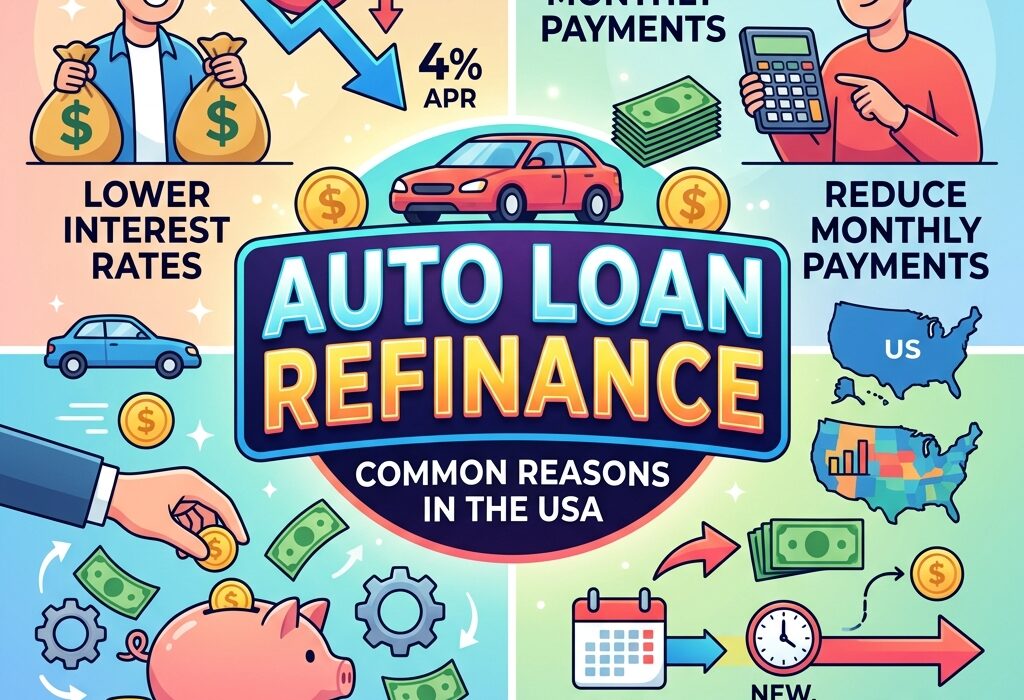
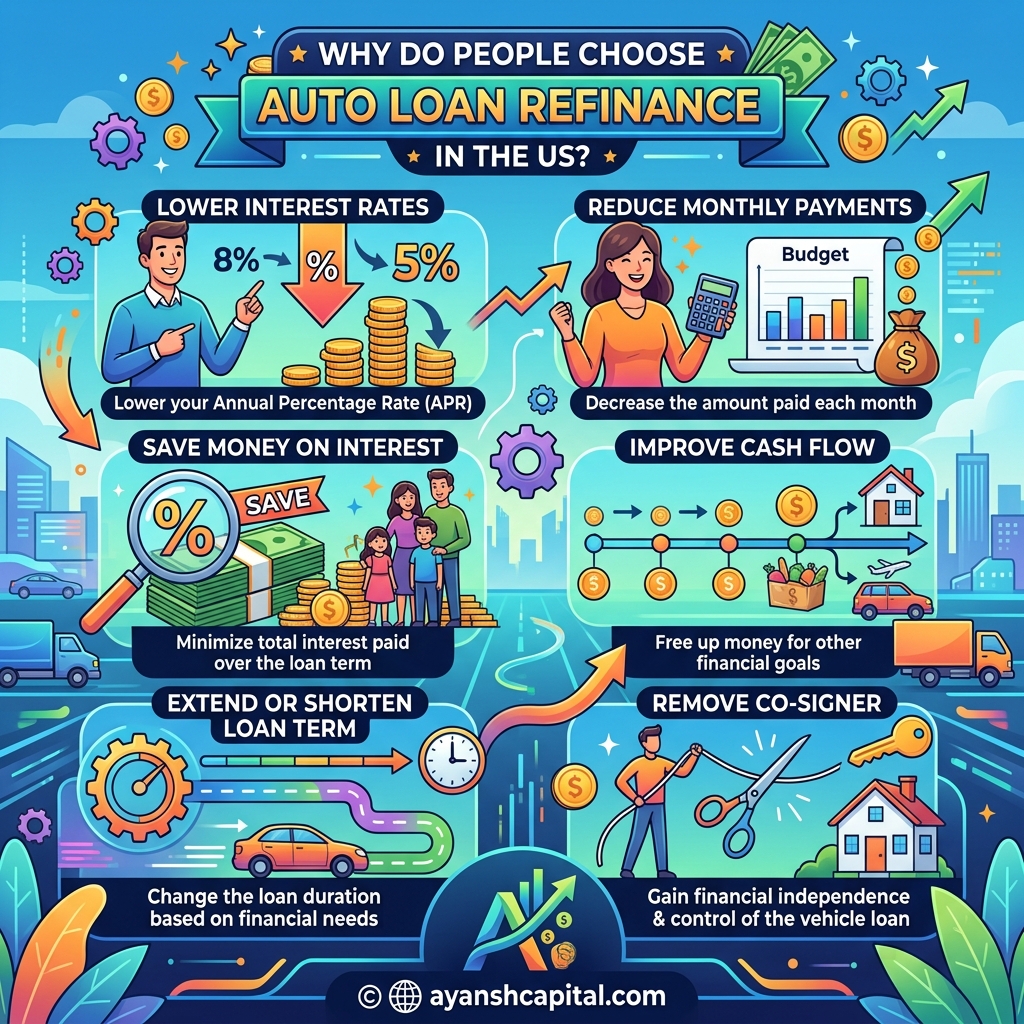
Here are the four deeply personal reasons why smart families choose to rewrite their car loans:
1. Beating the Dealer’s Secret Trap (Lowering Your Rate)
- Dealerships often act as sneaky middlemen, secretly inflating your interest rate (like turning a fair 5% into a cruel 7%) just to pocket your hard-earned cash.
- As your credit score heals from past struggles and proudly jumps from 650 to 750, you can finally bypass the dealer entirely and claim the low rate you truly deserve.
- The Honest Math: Imagine you owe $25,000 over 60 months. At an unfair 9.0% rate, you lose $518.96 monthly, watching your savings drain away.
- The Beautiful Result: By securing a better rate of 5.0% through an Auto Loan Refinance, your payment drops to $471.78.
- You save $47.18 every single month, keeping a massive $2,830.80 safe over the life of the loan. That is nearly $3,000 going toward your children’s future instead of a banker’s pocket!
2. Finding Breathing Room for Your Daily Budget
- Sometimes life hits hard—sudden medical emergencies, unexpected job losses, or just the painful, rising cost of daily groceries.
- When your family’s budget feels suffocating, you can gently stretch your remaining 48 months into a longer, more relaxed 72-month journey.
- This instantly shrinks your monthly burden, keeping food on the table today and giving you immediate peace of mind to breathe again.
- A Caring Warning: Stretching the years means paying a bit more interest over time, and your car’s value might drop faster than your debt. Use this option only as a life jacket to survive tough times.
3. Escaping Debt and Claiming True Freedom
- On the flip side, maybe your hard work finally paid off, your income increased, and you are tired of being chained to a never-ending 7-year burden.
- You can shorten your journey to a fast, aggressive 36 or 48 months using a smart Auto Loan Refinance. Yes, your monthly burden will go up slightly.
- The Ultimate Reward: By doing this, you will slash thousands of dollars in useless interest and finally hold the real ownership paper of the car in your own hands, experiencing true, unshakable freedom much sooner.
4. Setting Your Loved Ones Free (Removing a Co-signer)
- When you were young or struggling, a loving parent or spouse beautifully added their name to your loan, risking their own good reputation because they unconditionally believed in you.
- But that loving favor ties up their record. If they want to buy a new family home tomorrow, your car debt might get their dream unfairly rejected.
- Because banks rarely erase a name from old paperwork, doing a fresh Auto Loan Refinance strictly under your own name is the most honorable way out.
- It completely clears their record, protecting their dreams while proudly proving to the world that you are now strong enough to stand on your own two feet.
How an Auto Loan Refinance Can Save Your Family from Unfair Debt
Your family’s financial peace is far too precious to be stolen by a bad, overpriced car loan. If you are struggling with heavy monthly payments, this is your ultimate roadmap to break those chains. Let’s walk through the exact 7 steps to free yourself from this trap and bring that wealth back home to your children where it truly belongs.
Step 1: Find the True Cost of Your Freedom
- Taking just 15 to 30 minutes out of your busy evening to start a new Auto Loan Refinance is the first brave step to stop banks like Chase or Capital One from draining your wallet.
- The “Payoff” Truth: Don’t just glance at your phone app. Confidently ask the bank for a “14-Day Payoff Quote” so every single penny of daily interest is covered, leaving no hidden traps behind.
- Record the Burden: Finding that long 14 or 16-digit account number isn’t just boring paperwork; it is finding the exact key to unlock your family’s financial handcuffs safely and forever.
Step 2: Check Your Reputation Before You Apply
- When lenders check your FICO Auto Score 8 or 9, they aren’t just reading numbers; they are reading the proud story of every late shift you worked to pay your bills on time.
- The Reward of Hard Work (Scores 720 to 850): If you sacrificed your own needs to keep a high score, banks will fight for you, offering the cheapest Auto Loan Refinance to save your household thousands.
- Healing Past Scars (Scores Below 659): If life hit you hard and forced you into a cruel 18% or 25% trap, do not lose hope. Waiting just 2-3 months to raise your score to 665 is a beautiful act of self-respect that proves you are bouncing back.
Step 3: Discover What Your Car is Actually Worth
- Checking trusted sites like Kelley Blue Book or Edmunds isn’t just math; it is making sure the honest “Trade-in Value” of your car can comfortably protect your family’s future.
- The Joy of Positive Equity: Realizing your car is worth $20,000 while you only owe $15,000 feels like a massive victory, and new lenders will welcome your Auto Loan Refinance with open arms.
- Facing the Underwater Trap: If your car is worth $15,000 but the old bank demands $18,000, that $3,000 difference feels like a heavy stone. Bravely paying that from your own savings is a courageous sacrifice to permanently escape their 120% limit trap.
Step 4: Make the Banks Beg for Your Business
- Never accept the very first offer. Community credit unions (like PenFed) and fast online lenders (like LightStream) genuinely want to offer lower rates to help hard-working parents breathe easier.
- The 14-45 Day Shield: Don’t let the fear of a credit drop stop you! Checking rates at five different places within a 14 to 45-day window smartly counts as just one tiny inquiry for an Auto Loan Refinance.
- Sacrificing a tiny 2 to 5 points on your score for a few weeks is a painless, beautiful trade-off to find a safe haven for your hard-earned money.
Step 5: Prove Your Dedication to the New Bank
- Gathering your last 30 days of W-2 pay stubs isn’t boring—it is proudly showing the new bank your sweat, your overtime, and your deep dedication to providing for your loved ones.
- Proving Your Hustle: If you are self-employed (1099), showing 1 to 2 years of tax returns proves the late-night sacrifices you made to keep your small business alive safely.
- Showing your 17-character VIN and your “Full Coverage” insurance card secures your Auto Loan Refinance and promises the bank that you are fiercely protecting your family’s vehicle from any heartbreaking accidents.
Step 6: Cutting the Old Chains Forever
- Once approved, your caring new bank will directly wire the massive payoff amount to your greedy old lender (like Toyota Financial), permanently closing that stressful chapter of your life.
- A Lifesaving Warning: Keep paying your old bill until you get a letter screaming “Paid in Full.” You do not want a silly late fee ruining your flawless record during this 1 to 2-week transition.
- The new bank might add a tiny $15 to $50 fee (in places like Texas or California) to officially stamp your name on the title at the DMV, softly finalizing your Auto Loan Refinance without you standing in exhausting government lines.
Step 7: Making Sure Your Car Meets the Safety Rules
- Banks demand that cars be under 10 to 12 years old and below 100,000 to 150,000 miles, not to be cruel, but to guarantee your children never end up crying on a dark highway next to a broken engine.
- The Sensible Limits: To qualify for an Auto Loan Refinance, your debt must be between $5,000 and $75,000, keeping the focus strictly on honest, everyday family cars instead of crazy luxury debts.
- Protecting Your Life: Banks absolutely refuse to finance “Salvage” cars crushed in horrific fires or floods, proving they value your family’s precious lives far more than just making a quick business deal.
Our Final Opinion: Your Auto Loan Refinance Journey Starts Today
Completing an Auto Loan Refinance is one of the most brilliant, loving decisions you can make for your household. It is not just about moving numbers on a screen; it is about taking back your dignity from an unfair system. Follow these exact 7 steps, protect your hard-earned paycheck, and use those thousands of dollars saved to build a beautiful, highly secure future for the people you love unconditionally!
The Ultimate Guide: How an Auto Loan Refinance Secures Your Family’s Future
Many hard-working Americans fear that touching their credit will ruin their lives. But understanding the honest, everyday story behind your credit score gives you the ultimate power to protect your family’s daily bread.
Your Financial Reputation vs. A Tiny Scratch
- When you finally submit an application for an Auto Loan Refinance, the bank takes a deep look into your financial past. This might drop your score by a tiny 2 to 5 points, like a small scratch on a strong shield.
- The Beautiful 14-45 Day Forgiveness: The big credit agencies know you are a loving parent desperately comparing prices to protect your household budget.
- Because they respect this, if you bravely send out 5, 10, or even 20 applications for an Auto Loan Refinance within a 14 to 45-day window, the system kindly forgives you and counts it all as just one single credit check.
- The 15% Dip vs. 35% Victory: Closing your old bank account takes away a small 15% piece of your financial history, causing a temporary dip in your score.
- But do not worry! The biggest, most powerful chunk of your reputation—a massive 35%—is built purely on your honesty in paying bills. Making flawless, on-time payments for the next 6 months deeply heals your score, making you financially stronger than ever.
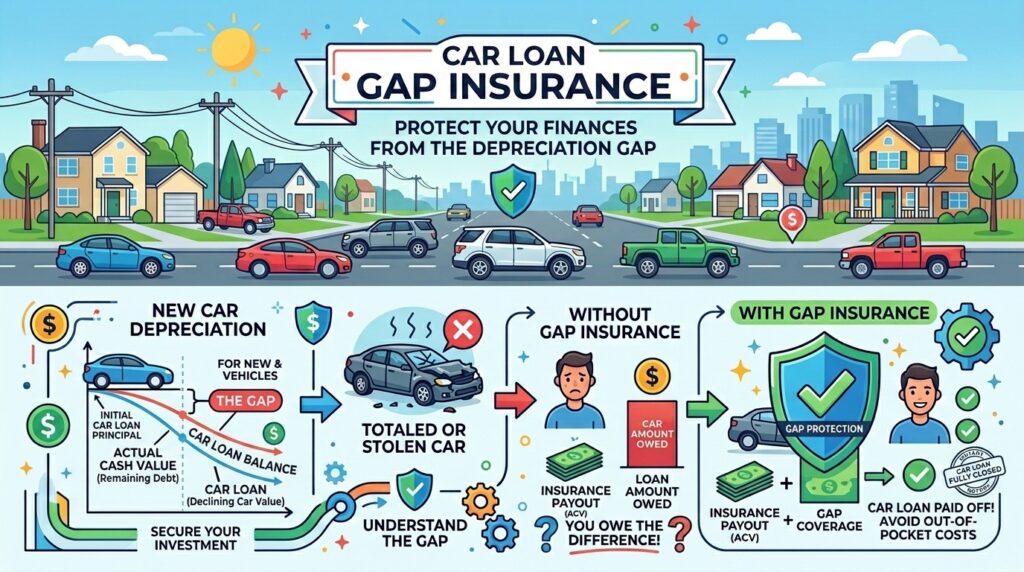
The Hidden $4,000 Heartbreak (The GAP Insurance Trap) This is the dangerous trap where many innocent families accidentally lose their life savings in a single tragic afternoon.
- The Harsh Reality of Melting Value: Imagine working hard to buy a beautiful $25,000 car to safely drive your kids to school. The cruel reality of the world is that the moment you drive it home, its value silently drops by 10% to 20%, melting away like ice.
- If a careless driver completely destroys your car a year later, your regular insurance company will coldly hand you its street value of just $18,000.
- But your old bank will still mercilessly demand their full $22,000. That missing $4,000 is a terrifying nightmare. GAP Insurance beautifully steps in to pay that difference, saving your hard-earned savings.
- The Silent Danger: The exact moment your Auto Loan Refinance is finalized and the old bank is paid off, your old dealership GAP policy automatically dies.
- To keep your family completely safe, use your new Auto Loan Refinance as a daily reminder to immediately call major insurers like USAA, Progressive, or State Farm.
- They will easily add GAP to your regular policy for just a few extra dollars a month. And always demand a “Prorated Refund” from the old dealership—that is hundreds of dollars rightfully going back into your children’s piggy bank!
The Beautiful, Honest Rewards for Your Family When looking at the bright side, you must weigh your family’s immediate survival against building long-term wealth.
- Dropping your interest rate by a mere 2% or 3% is not just math; it silently saves thousands of dollars that can buy warm winter clothes or go directly into your family’s emergency medical fund.
- If sudden job loss or high grocery prices are suffocating you, extending the loan term to save $50 to $150 a month instantly pumps life-saving ‘oxygen’ into your household budget.
- If your credit gracefully healed from a painful 620 up to a proud 710, an Auto Loan Refinance unlocks a beautiful 5% or 6% rate, proving to the world that your endless hard work truly paid off.
The Hidden Pain You Must Protect Yourself From Not everything is perfect. You must protect your peace of mind from the hidden traps of the banking world.
- The Time Trap: A rushed Auto Loan Refinance can sometimes hurt you if you blindly stretch a short 4-year promise into a heavy 6-year (72-month) burden, causing you to bleed thousands in extra long-term interest just for temporary relief.
- Taking a 2 to 5-point hit on your credit score and paying hidden bank processing fees can feel deeply frustrating when you are already tight on cash.
- Add to that the annoying $15 to $50 fee your local state charges to change the ownership name on the car’s title, and those small headaches begin to steal your peace.
When to Walk Away (Four Massive Traps for Your Family) Every financial tool has its perfect moment. In these four stressful situations, changing your loan will only break your heart:
- The Finish Line: Banks forcefully take their heaviest profit in the first few years. If you have already suffered through 4 long years and only have 12 to 18 months left on a 60-month journey, stay strong—you are almost totally free!
- Cruel Fines: If your greedy old bank demands a harsh $500 penalty fine just to let you leave, changing your loan is mathematically useless if it only saves you $300 in interest. You would be stealing from your own family.
- The Deep Underwater Trap: If your car is honestly worth only $12,000 on the street, but the bank cruelly claims you owe $18,000, you are deeply trapped in a $6,000 hole.
- No caring lender will rescue you from this gap unless you bravely sacrifice $4,000 to $5,000 from your own household savings to break free.
- The Dream Home Threat: If you dream of buying a beautiful family home with a backyard for your kids in the next 6 months, an Auto Loan Refinance will terrify your home lender and brutally destroy your chances of getting approved.
Claiming Your Financial Victory You are no longer a helpless victim of the dealership’s hidden games; you are the ultimate protector of your family’s wealth.
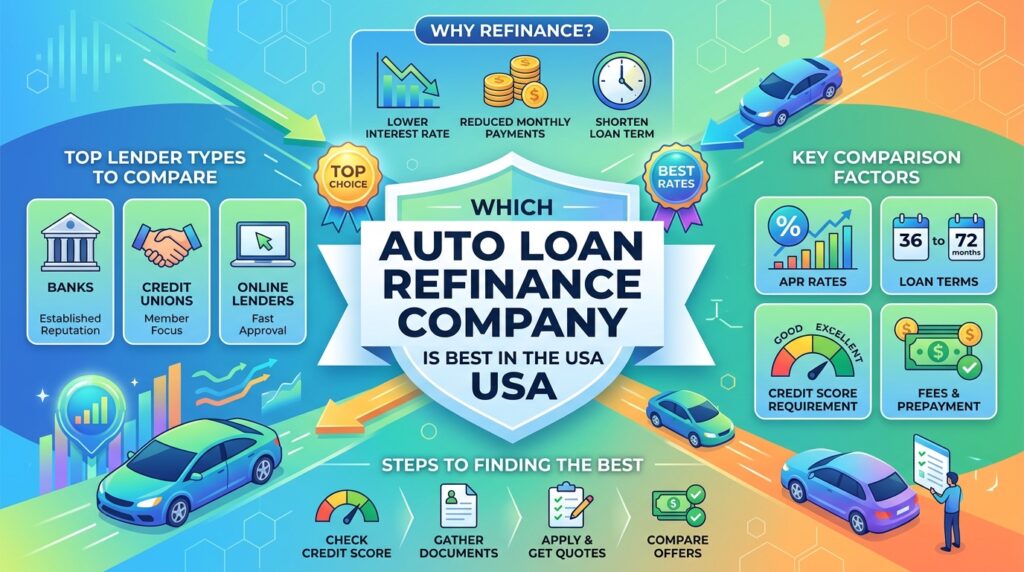
Force community credit unions and online lenders to fiercely compete for your hard-earned business. Always focus on the total, long-term cost of the loan, not just the monthly illusion, and never forget to sync your GAP insurance immediately.
When guided by honest math and family values, an Auto Loan Refinance is your ultimate victory against unfair debt, fully accelerating your journey to a peaceful, independent life!
60 Safe Havens to Rescue Your Family’s Hard-Earned Money
When you are fighting every single day to protect your family’s budget, the banking system can feel cold, greedy, and merciless. But you do not have to fight this battle alone.
To help you find the most caring partner for your Auto Loan Refinance, we have carefully gathered the 60 most honest groups of people in the country. These are not faceless corporations; they are people who will treat your family’s sweat-and-blood money with the ultimate dignity it deserves.
A. Community Protectors (The Most Forgiving Rates)
These are communities of people helping people. Without the cruel pressure of making billionaires richer, they offer the safest paths for your Auto Loan Refinance, ensuring your paycheck stays safely inside your home.
- PenFed: They fiercely protect your life savings with rock-bottom rates, and they welcome every hard-working civilian into their family with open arms.
- Navy Federal: The ultimate shield for our brave military families, offering unmatched respect, love, and quiet protection for your household budget.
- DCU: Beautifully rewards parents who drive clean cars, giving special discounts to help protect the air our children breathe.
- Alliant: A quiet, fast-moving helper that gives you quick answers so you can finally close your eyes and sleep peacefully without financial anxiety.
- Consumers: Welcomes your family into their safe circle with just a tiny good-faith donation, instantly slashing your heavy monthly burden.
- First Tech: Perfect for those working long, exhausting hours at a computer, helping you escape massive, stressful car debts.
- SECU: A fiercely loyal partner standing guard over the honest, hard-working state employees who keep our cities running safely.
- SchoolsFirst: Honors dedicated teachers with total honesty, ensuring no hidden traps ever steal food from their tables.
- BECU: Once just a small circle of workers, this group now helps everyday families entirely escape the jaws of predatory loans.
- Golden 1: A giant protector that trusts your honest daily work and approves you quickly without secretly stealing your money in fees.
- Bethpage: Open to the entire country, sitting down to show you honest, straightforward numbers with total kindness and transparency.
- Suncoast: Florida’s finest protector, offering a safe Auto Loan Refinance to keep your family’s grocery budget completely untouched.
- RBFCU: A fast-acting partner that rapidly rescues your family from the greedy, suffocating rates of your old dealership.
- Mountain America: A wise guide that patiently teaches your family how to grow true wealth and slowly escape the chains of debt.
- America First: Brings true, honest financial relief right to your living room couch so you don’t have to waste time driving to a branch.
- VyStar: Honors families by strictly refusing to charge cruel early payoff penalties, rewarding you for clearing your debt faster.
- Delta Community: A proud circle that treats every normal, hard-working parent like an absolute first-class citizen.
- Bellco: A caring guide that actively holds your hand to help you heal a bruised, tired financial past without passing judgment.
- Patelco: A stress-free haven for tired parents who just need a break from the endless mountain of monthly bills.
- Logix: Happily rescues even older family cars so your loved ones are never left stranded on a dark road with a bad loan.
B. Your Personal Matchmakers & Guides
If you are too busy working late shifts to feed your kids, these helpful guides do all the exhausting searching for you. They force greedy lenders to fight for your respect and business.
- AutoPay: Works tirelessly for you by forcing hundreds of lenders to battle to give your family the lowest, fairest survival rate.
- Caribou: A perfectly clear, honest path with absolutely zero hidden traps to steal your family’s peace of mind.
- RefiJet: Gives you a caring personal guide who holds your hand and does all the exhausting government paperwork for you.
- rateGenius: Searches far and wide through local communities to guarantee your family gets the absolute best lifeline available.
- iLending: Fights tirelessly to put an average of $100 back into your family’s daily grocery fund every single month.
- MyAutoLoan: Brings four honest lifelines right to your kitchen table in minutes, ending your anxious waiting instantly.
- LendingTree: Lets you easily view all your family’s options, including a life-saving Auto Loan Refinance, in one simple place.
- Gravity Lending: Highly trusted by normal people, firmly refusing to charge you a single penny upfront just to ask for help.
- Tresl: Patiently rescues you from confusing lease traps, finally putting the car truly and legally in your own family’s name.
- Auto Credit Express: A warm, welcoming place that connects you to caring people even if life severely damaged your past record.
- Credible: Shows you totally transparent, honest numbers for your Auto Loan Refinance without ever hurting your dignity or your score.
- NerdWallet: Acts as a wise, trusted friend, matching you with the perfect helper based entirely on your life’s unique, personal story.
- Bankrate: A deeply trusted old friend that lets you safely look at survival rates without leaving a single scratch on your official record.
- Credit Karma Auto: Uses the story of your hard work to hand you guaranteed, safe offers on a silver platter without the stress of rejection.
- Lantern by SoFi: Searches a massive community to find the absolute safest, quietest harbor for your family’s debt.
- Monevo: Instantly gathers the best survival quotes from top lenders to save your precious time so you can be with your children.
- CarsDirect: Uses their massive influence to fiercely fight for your family’s right to a much cheaper monthly bill.
- Rategiant: Specifically focuses on shrinking that terrifying monthly bill so you and your spouse can finally breathe easily again.
- The Zebra: Brilliantly helps you slash both your heavy car debt and your car insurance bill at the exact same time.
- RateWeb: Pits small local communities against big national giants to ensure you walk away as the true, respected winner.
C. Second-Chance Heroes for Bruised Pasts
If life hit you hard, sickness drained your savings, or you simply made a human mistake, these compassionate groups believe in second chances. They will confidently approve your Auto Loan Refinance when cold, traditional banks cruelly turn their backs.
- LightStream: Rewards your years of flawless payments by trusting you completely and putting the cash straight into your hands.
- Ally (Clearlane): Beautifully helps you remove a loving co-signer, setting your family members totally free from your past burdens.
- OpenRoad: A compassionate partner offering a true second chance if past medical bills or emergencies left your record bruised.
- LendingClub: A community of people helping people; they look past cold numbers and respectfully judge you by the honest sweat of your daily labor.
- OneMain: A true lifesaver that sits down with you face-to-face to help your family survive the absolute toughest of times.
- Avant: Brings respectful, dignified rescue options directly to the privacy of your home so you don’t have to face a judgmental bank teller.
- Westlake: Proudly catches the hard-working families that cold, traditional banks cruelly throw away out into the cold.
- IFS: Carefully helps you move a stressful company vehicle safely and legally into your own personal name to protect your livelihood.
- Upgrade: Doesn’t just hand you a loan; they patiently teach you how to rebuild your dignity and your financial future safely.
- Tenet: Exclusively protects families trying to drive clean cars, keeping their monthly burden surprisingly light and totally manageable.
- RoadLoans: Gives hard-working parents who suffered a painful financial fall a safe, direct path to healing and redemption.
- Exeter: Gently holds the hands of families bravely trying to rebuild their shattered lives after the deep tragedy of a bankruptcy.
- Credit Acceptance: The ultimate safety net that firmly believes every single struggling family deserves a second chance to drive safely.
- Santander: Specifically builds highly forgiving, gentle plans for parents desperately struggling to escape a bruised financial past.
- Flagship: Rescues families whose lives are finally improving but are still trapped in old, predatory loans, offering a healing Auto Loan Refinance.
- GLS: Looks right past strict banking rules with deep compassion, seeing the honest, hard-working human standing behind the bad credit score.
- Bridgecrest: A dedicated financial nurse helping battered, exhausted families slowly rehabilitate their lives with immense dignity.
- Oportun: Warmly welcomes new families to the country by using simple light and water bills to prove their deep, undeniable honesty.
- Regional Finance: A southern hero offering deeply manageable payments to families hanging by a delicate financial thread.
- Prestige: Forgives even recent, severe financial tragedies, bravely granting you an Auto Loan Refinance when everyone else screams no.
The Final Step to Reclaiming Your Wealth
Reading through these 60 honest options proves one beautiful truth: your family is never completely trapped. Whether you have a flawless history of hard work or are desperately fighting to rebuild your family’s dignity, there are good people waiting to help you.
Take a deep breath, pick the partner that respects your life’s journey, and let your Auto Loan Refinance be the powerful weapon you use to win back your family’s true financial freedom today.
Quick Answers to Protect Your Family: Your Auto Loan Refinance FAQs
Q1: What exactly does this mean for my family?
- Answer: An Auto Loan Refinance is a rescue plan. It means replacing your expensive, unfair car debt with a new, much cheaper one, stopping greedy lenders from draining your family’s daily bread.
Q2: Will checking my background hurt my good name?
- Answer: Only a tiny bit. The new lender takes a deep look at your past financial struggles, causing a very small scratch on your reputation. But do not worry; your good name heals beautifully in just a few short months.
Q3: What is the absolute biggest reward for my household?
- Answer: Pure, honest savings. By shrinking the extra money you pay to the bank, you keep thousands of dollars safely at home to feed your children and build their bright future.
Q4: Can I get help if I owe more than my car is actually worth?
- Answer: It is heartbreakingly tough. If your car is worth $10,000 but the old lender cruelly demands $15,000, you are deeply trapped. You must bravely sacrifice that difference from your own household savings first to completely escape.
Q5: When is the perfect time in life to make this escape?
- Answer: The beautiful moment your tireless daily hustle finally heals your past money struggles, or when the banking system lowers its costs to give everyday working parents a desperately needed break.
Q6: Are there any sneaky hidden traps I should fear?
- Answer: Honest helpers charge nothing upfront. You only pay a tiny $15 to $50 local government stamp to legally free your car from the old bank and bring it safely under your own family’s control.
Q7: How long does this entire rescue journey take?
- Answer: Financial relief comes incredibly fast. Once approved, rescuing your car from the dealership’s exhausting grip takes only a few days to a week of patient waiting.
Q8: What happens to my old accident protection?
- Answer: The exact moment your Auto Loan Refinance closes, your old dealership safety net dies instantly. You must buy a new safety shield immediately to protect your loved ones from a devastating car loss.
Q9: Should I stretch my debt to 6 years just to lower my monthly bill?
- Answer: Only do this if your family is desperately suffocating for cash today. A stretched Auto Loan Refinance gives you breathing room right now, but it silently steals more of your lifelong wealth in the end.